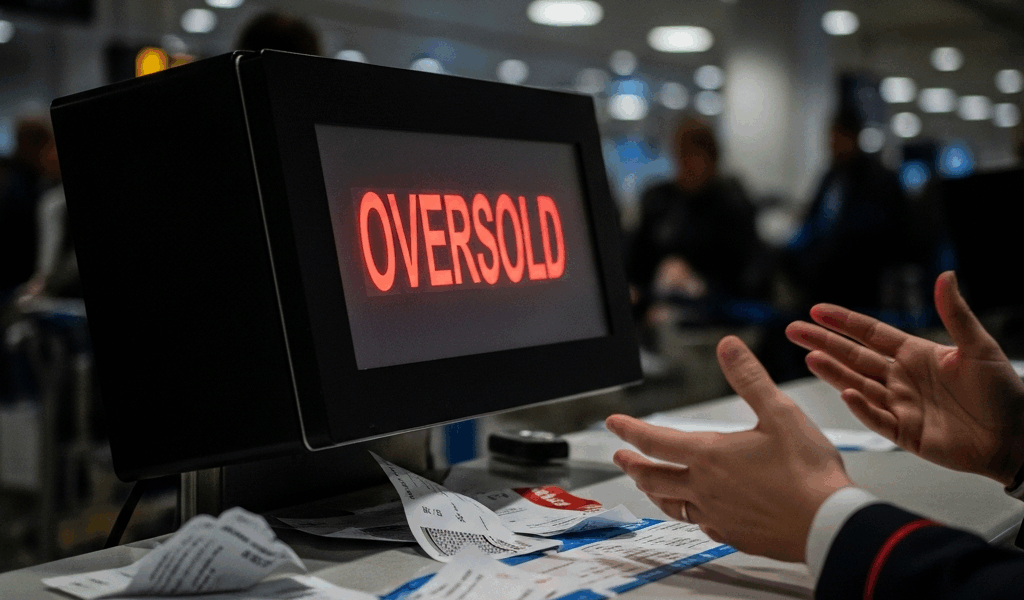
Understand What’s Actually Happening
Getting bumped from a flight hits different when you realize the airline isn’t treating all removals the same way — and that distinction determines your entire financial outcome.
Involuntary bumping means the airline forced you off the flight because they overbooked. You showed up with a valid ticket, a confirmed seat assignment, and arrived on time. They removed you anyway. That’s the scenario triggering legal compensation rights — substantial ones, depending on your route.
Voluntary bumping works differently. The airline asks for volunteers willing to give up seats in exchange for compensation they’re offering. You can negotiate, walk away, or accept. Fundamentally different because you’re actually choosing to participate.
Why does this distinction matter? Involuntary bumps come with government-mandated compensation floors — amounts the airline must pay. Voluntary bumps? That’s negotiation. The airline offers what they want, and if nobody accepts, they move to involuntary removal for select passengers.
Immediate Steps at the Gate (First 5 Minutes)
Those first five minutes determine everything. I learned this the hard way getting bumped from a United flight to Denver back in 2019, watching someone else walk away with $1,200 in flight credits while I was still processing what had happened.
- Stay calm and listen to the full announcement. The gate agent will explain the situation. Don’t interrupt. Don’t get heated. Let them finish talking. I know it sounds basic, but I’ve watched people miss compensation eligibility by getting angry before the agent even finished explaining the overbooking situation.
- Ask if they’re looking for volunteers first. Almost always they are. Listen carefully to what they’re offering. A gate agent might say something like “We’re looking for two volunteers. We’re offering $400 in flight credit plus a hotel and meal voucher for tomorrow’s 6 AM flight.” Write down exactly what they say. Ask clarifying questions: “Is that credit usable on any airline or just this one?” “Does the hotel booking happen now or later?” Most travelers skip this and miss better deals than what involuntary removal would force them into.
- Request a written explanation. Ask the gate agent: “Can you provide me with written documentation explaining why I was selected for this involuntary removal?” This creates a paper trail — whether they handwrite it on your boarding pass or print something official, you now have dated, timestamped evidence.
- Get the gate agent’s name and employee ID. Look at their name tag. If you can’t read it, ask directly: “What’s your name and employee ID number?” Write it down immediately. Later, when you file a complaint or claim compensation, you’ll need this information to reference the specific interaction.
- What NOT to do: Don’t refuse to listen. Don’t raise your voice. Don’t board the plane to make a scene — you’ll just get escorted off anyway. Don’t sign anything without reading it. Some airlines try getting passengers to accept travel vouchers as “full compensation,” which legally might not be correct.
Negotiate for the Best Outcome
Once you’ve documented the basic facts, negotiation begins. This is where you stop being passive and start being strategic.
Frame the conversation as collaborative, not adversarial. The gate agent isn’t your enemy — they’re executing policy, often under real constraints. Your job is making it easier for them to give you better treatment while staying within their authority.
Use this approach: “I understand the situation and I appreciate you explaining it. What options do you have for getting me on the next available flight to my destination? And what compensation or accommodations are you authorized to offer?”
This accomplishes two things. First, it acknowledges reality. Second, it asks them to reveal what they can actually do, rather than you guessing or them stonewalling.
Your leverage points matter:
- If you have airline status — mention it: “I’m a Gold member with this airline. How does that factor into the rebooking and compensation?”
- If the flight is connecting and you’ll miss the connection, make that explicit: “My next flight departs at 2 PM. I can’t make that if you put me on the 4 PM flight. What’s the solution?”
- If the compensation includes travel credit you don’t want, push back: “I appreciate the $500 credit, but I need a refund to my original payment method. Can that be arranged?” Some airlines will budge on this; some won’t. Asking costs nothing.
- Business travelers sometimes have leverage through corporate travel programs. Mentioning your company negotiates directly with the airline can shift the conversation.
Different scenarios demand different approaches. Getting rebooked on the same day on another flight that works — that’s usually your best outcome. You reach your destination on time plus statutory compensation on top. If the only option is a next-day flight, negotiate hard for hotel, meals, ground transportation, and a higher compensation package.
Know Your Compensation Rights by Region
This is where the law actually protects you in specific, measurable ways.
United States (DOT Rules): If you’re involuntarily bumped on a domestic flight, the Department of Transportation mandates compensation. Involuntary bump with arrival 1-2 hours late? The airline owes you 200% of the one-way fare (capped at $775). More than 2 hours late means 400% of the one-way fare (capped at $1,550). Under 250 miles and less than 1 hour late — that’s 100% of the one-way fare (capped at $775). Important: This is in addition to rebooking or a refund. You get both.
European Union (EC 261/2004): EU regulation 261 is considerably stronger than US rules. Involuntary bumping on any flight departing from an EU airport — or arriving at one on an EU carrier — triggers compensation. The amount depends on distance: €250 for flights up to 1,500 km, €400 for intra-EU flights over 1,500 km, and €400-€600 for other flights over 1,500 km. Add meal vouchers, accommodation if needed, and communication expenses. The airline must provide all this — you shouldn’t pay out of pocket.
International flights (other regions): Canada’s rules are similar to the US but slightly more generous (compensation up to CAD $2,400). Australia requires compensation and mandates carriers provide meals and accommodation. Outside these regions, the airline’s own policies typically apply — and those are usually less generous. Always check your airline’s specific terms.
Most travelers miss this: compensation and rebooking are separate. You get compensated for inconvenience. You also get rebooked to your destination. If the airline frames compensation as an alternative (“Take $500 or we’ll rebook you tomorrow”), that’s not legal in regulated markets. Demand both.
After You Leave the Gate
The bumping doesn’t end at the gate. Follow-up work determines whether you actually receive the compensation you’re legally owed.
Document everything immediately. Photograph your boarding pass showing the flight number, your seat assignment — which proves you were confirmed — and the gate area if possible. Write down the gate agent’s name, the time, and exactly what they told you. Note any compensation or rebooking they offered. If they provided written documentation, photograph it. Do this within an hour while details are sharp.
Collect all receipts if the airline doesn’t cover meals, accommodation, or ground transportation. Boarding pass copies, hotel receipts, taxi receipts, food purchases — keep everything. You’ll need these if you file a claim and the airline disputes what you spent.
File a formal complaint. In the US, contact the Department of Transportation’s Aviation Consumer Protection Division. Submit a complaint online at dot.gov with your documentation — boarding pass scan, gate agent’s name, flight details, what happened. The DOT forwards it to the airline, and they have 30 days to respond.
In the EU, contact your national aviation authority — DGAC in France, LBA in Germany, and so on. The complaint process is similar.
Compensation claims typically take 2-6 months through formal channels. Sometimes the airline pays immediately after a DOT complaint. Sometimes they push back, claiming an exception applied — mechanical issues, security concerns. If they claim exceptions, ask for written confirmation of the reason for the overbooking and bumping. Document that.
How to Avoid Getting Bumped
Prevention isn’t foolproof, but the odds shift in your favor with three concrete actions.
Check in 24 hours in advance online. This locks in your reservation and reduces any chance a system error or clerical issue leads to your name being selected for bumping.
Arrive at the airport early and get to the gate early. Involuntary bumping selections often happen within 2 hours before departure. If you’re already at the gate, you’re off the “available for removal” list. Not guaranteed, but it matters.
Know your airline’s overbooking patterns. Budget carriers overbook far more aggressively than others. United, American, and Delta do overbook frequently. Flying a high-risk route during peak travel times? Add extra time or choose a less-congested flight time if possible.
Probably should have opened with this section, honestly. Prevention is easier than negotiation at the gate. But if you’re already reading this article, you’re likely already bumped or preparing for that reality — so the negotiation tactics matter more than prevention tips.


Stay in the loop
Get the latest airport guides world updates delivered to your inbox.