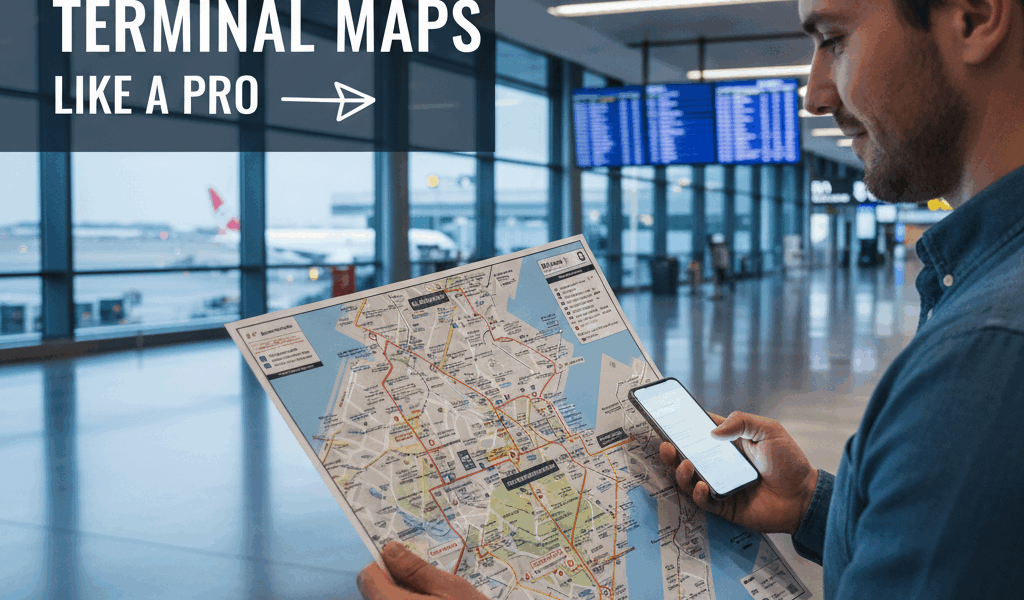
Airport operations have gotten complicated with all the changes and updates flying around. As someone with extensive travel experience, I learned everything there is to know about this topic. Today, I will share it all with you.
How to Actually Read Those Confusing Airport Terminal Maps
Look, I will be honest with you – I have gotten lost in airports more times than I would like to admit. Even after years of travel, I still sometimes find myself squinting at those maps like they are written in hieroglyphics. But I have finally cracked the code, and I am going to share what I have learned.

The Basics That Nobody Explains
Gates: Those letter-number combos like A12 or B5? That is where your plane actually lives. The letter usually tells you which concourse or terminal you need, and the number is your specific gate. Simple enough, right?
Security checkpoints: Usually shown with a little shield icon or just labeled “Security.” Here is a tip – if there are multiple checkpoints, some are almost always less crowded than others. Worth checking which one is closest to your gate.
Restrooms: Universal symbols, you cannot miss them. Most airports space these out pretty regularly along the concourses, so do not panic if you pass one – there is probably another in a few minutes.

Color Coding is Your Friend
Most airports are not trying to confuse you – they actually want you to find your gate without bothering their staff. That is why they use color coding. International terminals might be blue, domestic might be green, whatever. Pay attention to these colors because they are usually consistent on the actual signs you will see walking around.
Those Little Train and Bus Symbols
If you see icons for trains or shuttles, pay attention. At big airports, these inter-terminal connections can save you a 20-minute walk. I learned this the hard way at DFW – walked what felt like three miles before realizing there was a Skylink train I could have taken.
Finding Food and Shops
Knife and fork means food. Shopping bag means retail. Coffee cup means, well, coffee. These symbols are pretty universal, which is nice. Pro tip: the good restaurants are almost never right at your gate. You might have to walk a bit, but it is usually worth it.
Digital Maps Are a Game Changer
Honestly? Just download the airport app before you land. Most major airports have them now, and they will show you real-time gate changes, estimated walking times, and even wait times at security. Way better than trying to decipher a paper map while juggling your carry-on.
The Walking Time Trap
Here is something that took me years to figure out: maps lie about distance. What looks like a short hop on paper might involve stairs, escalators, security checkpoints, or waiting for that inter-terminal train. If you have got a tight connection, add at least 10 extra minutes to whatever you think it will take. Trust me on this one.



Stay in the loop
Get the latest airport guides world updates delivered to your inbox.