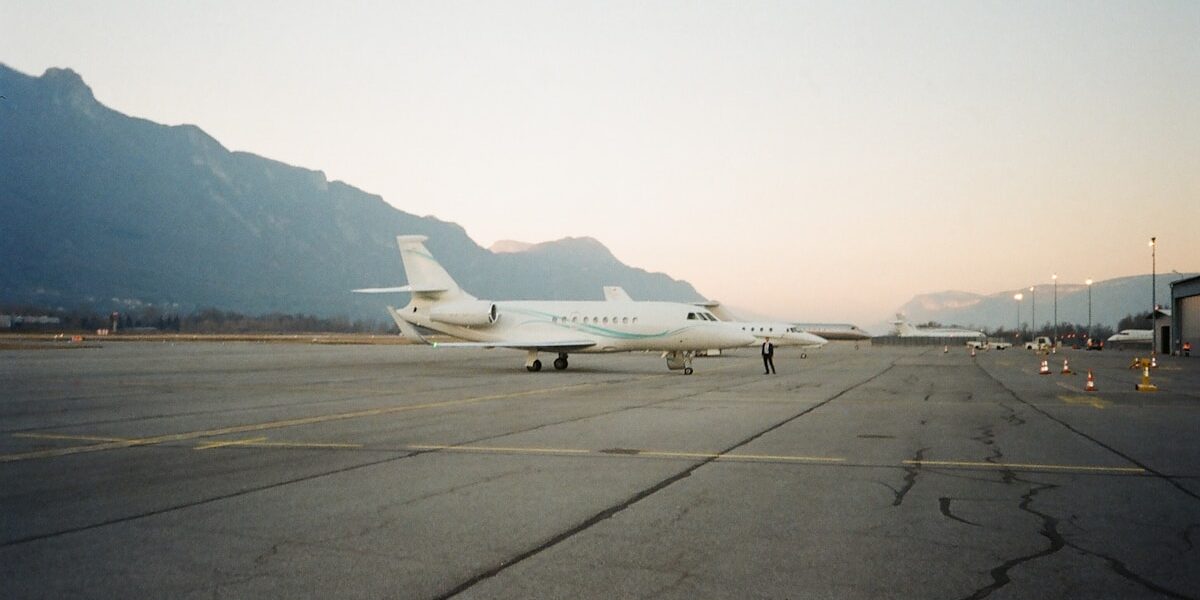
Boulder Municipal Airport (KBDU) serves Colorado’s Boulder County, providing general aviation access to one of the state’s most vibrant communities. Situated at the base of the Rocky Mountains with views of the Flatirons, the airport offers pilots a unique flying experience—and unique challenges that demand respect.
Airport Overview

Location and Elevation
- Identifier: KBDU
- Location: 3 miles northeast of Boulder, Colorado
- Elevation: 5,288 feet MSL
- Coordinates: 40°02’21″N, 105°13’32″W
- Time zone: Mountain (UTC-7/UTC-6)
Runways
Boulder has a single runway:
- Runway 8/26: 4,100 feet x 75 feet, asphalt
- Runway 8: Right traffic, PAPI on left
- Runway 26: Standard left traffic, PAPI on left
The 4,100-foot length is adequate for most light singles and some light twins, but density altitude considerations are critical—more on that below.
Communications
- CTAF/UNICOM: 122.7
- AWOS-3: 119.475
- Denver Approach: 120.35
- Denver Center: 134.4
Density Altitude: The Critical Factor
Boulder’s 5,288-foot field elevation makes density altitude the dominant consideration for every flight. During summer afternoons, density altitude routinely exceeds 8,000 feet and can approach 10,000 feet on hot days.
Performance Planning
At high density altitudes, expect:
- 30-50% longer takeoff rolls than sea level
- Reduced climb rates (potentially 50% or less of book values)
- Higher true airspeeds for given indicated airspeeds
- Degraded engine performance
Example: A Cessna 172 that lifts off in 900 feet at sea level may require 1,500-1,800 feet at Boulder on a warm day.
Time Your Flights
Smart Boulder pilots fly early morning or evening during summer months. A 7 AM departure might encounter 6,500-foot density altitude versus 9,500 feet at 2 PM. That difference dramatically affects performance margins.
Weather Patterns
Mountain Weather
Boulder sits immediately adjacent to the Rocky Mountain Front Range. This creates several weather challenges:
Mountain obscuration: Clouds frequently form against the Flatirons and foothills, reducing visibility in the pattern and making western departures problematic.
Turbulence: When winds exceed 15-20 knots from the west, mountain wave activity affects the entire Boulder area. Severe turbulence is possible, particularly on the lee side of terrain.
Afternoon thunderstorms: Summer months bring predictable afternoon convective activity. Thunderstorms typically develop over the mountains by early afternoon and move east.
Wind Considerations
Winds from the west frequently exceed 30 knots at pattern altitude while surface winds remain calm. This creates significant wind shear on approach. Downslope winds (Chinooks) can produce sudden, dramatic gusts.
Traffic Patterns and Procedures
Pattern Entry
Standard 45-degree entries to downwind are expected. Traffic pattern altitude is 6,288 feet MSL (1,000 feet AGL). Monitor CTAF carefully—Boulder sees significant training traffic from nearby flight schools.
Noise Abatement
Boulder has noise-sensitive areas east and south of the airport. The published noise abatement procedure requests:
- Runway 26 departures: Turn right to heading 320 before reaching Diagonal Highway
- Runway 8 departures: Continue runway heading to pattern altitude before turning
- Avoid overflight of residential areas below 1,500 AGL when practical
Services and Facilities
FBO Services
Boulder Airport includes full-service FBO operations offering:
- 100LL and Jet A fuel
- Aircraft parking (transient and tie-down)
- Hangar rentals (limited availability, waitlist common)
- Pilot lounge
- Rental cars and courtesy transportation
- Flight training
- Aircraft maintenance
Nearby Amenities
Boulder offers exceptional dining, hotels, and outdoor recreation just minutes from the airport. The University of Colorado campus is nearby, and downtown Boulder’s Pearl Street Mall provides walkable shopping and restaurants.
Approaches and Departures
VFR Operations
Visual approaches are straightforward in good weather. The Flatirons provide unmistakable landmarks for airport identification from considerable distance. The town of Boulder and the University of Colorado football stadium are also useful checkpoints.
IFR Operations
Boulder has GPS approaches to both runway ends:
- RNAV (GPS) RWY 8: LPV minimums 5920 feet MSL (632 AGL)
- RNAV (GPS) RWY 26: LPV minimums 5860 feet MSL (572 AGL)
Circling approaches may be required depending on winds and weather. The terrain west of the field limits circling options—exercise caution in reduced visibility.
Departure Procedures
IFR departures require careful terrain consideration. Diverse departure procedures apply with minimum climb gradients. Standard IFR departure for obstacle clearance is 360 feet per nautical mile to 9,000 feet.
Local Flying Destinations
Boulder makes an excellent base for Rocky Mountain flying:
- Rocky Mountain National Park: Spectacular scenic flights (maintain minimum altitudes over park)
- Grand Lake (KGNL): Mountain airport on the west side of the Rockies
- Steamboat Springs (KSBS): Popular ski resort destination
- Denver area airports: Centennial (KAPA), Rocky Mountain Metro (KBJC), Denver International (KDEN) all within 30 minutes
Tips for First-Time Visitors
- Check density altitude before every operation—use the AWOS or calculate manually
- Fly early in summer to avoid afternoon heat and thunderstorms
- Monitor winds aloft for mountain wave activity
- Allow extra runway for takeoff and landing
- Call ahead if you need fuel or services to confirm availability
- Respect noise abatement procedures—the airport’s community relations matter
- Have a backup—Rocky Mountain Metro (KBJC) offers an alternative with longer runways
Contact Information
- Airport Manager: City of Boulder Parks and Recreation
- Phone: (303) 441-3108
- Address: 3327 Airport Road, Boulder, CO 80301
Boulder Municipal Airport provides access to one of Colorado’s most desirable destinations. The combination of high elevation and mountain proximity demands that pilots understand density altitude, terrain, and mountain weather—but for those who prepare appropriately, Boulder offers memorable flying with spectacular Rocky Mountain scenery.

Stay in the loop
Get the latest airport guides world updates delivered to your inbox.