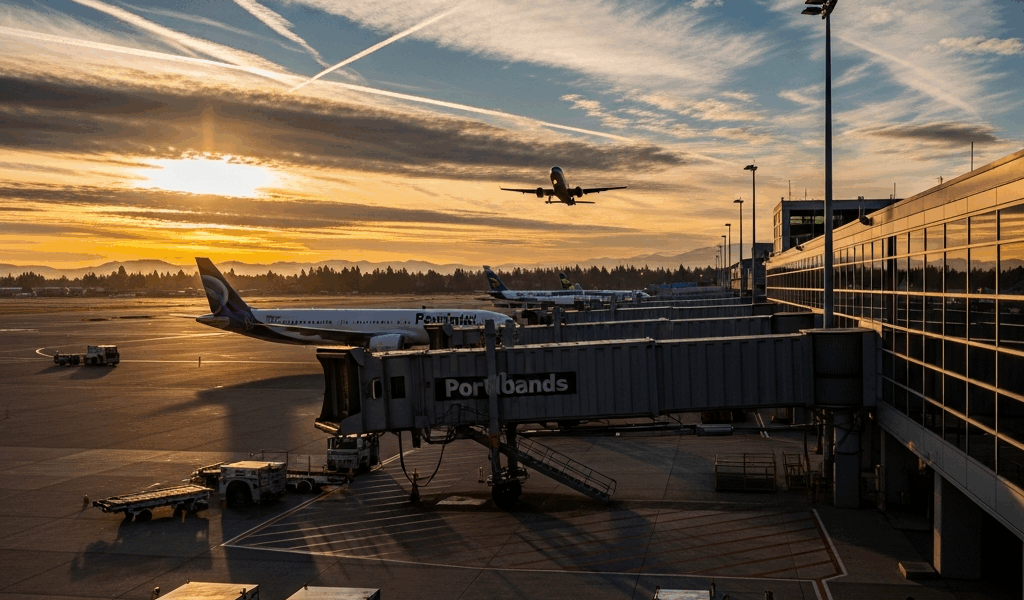
All Commercial Airports in Oregon — A Complete List With Details
Oregon airports have gotten complicated with all the outdated, Portland-centric travel advice flying around. Most sites list PDX and then basically shrug — as if the other 98,000 square miles of the state don’t exist or matter. That mistake cost me half a day and roughly $40 in gas — on a road I didn’t even want to be on. This is the guide I wish existed before I booked that ticket.
Major Oregon Airports at a Glance
Before getting into the details, here’s a reference table covering every commercial airport in Oregon with scheduled passenger service as of 2024. Charter-only and seasonal operations get their own section at the bottom — they’re worth knowing about, but they’re a different conversation.
| Airport Name | IATA Code | Location | Airlines Serving | Hub Status |
|---|---|---|---|---|
| Portland International Airport | PDX | Portland | Alaska, United, Delta, Southwest, American, KLM, Condor, others | Alaska Airlines focus city; Oregon’s primary international gateway |
| Eugene Airport (Mahlon Sweet Field) | EUG | Eugene | Alaska, United, American, Avelo | Regional; no hub designation |
| Rogue Valley International–Medford Airport | MFR | Medford | Alaska, United, Delta, Southwest | Regional; southern Oregon gateway |
| Redmond Municipal Airport (Roberts Field) | RDM | Redmond (Central Oregon) | Alaska, United, American, Avelo | Regional; Bend/Central Oregon gateway |
| Southwest Oregon Regional Airport | OTH | North Bend / Coos Bay | United Express (SkyWest) | Small regional; limited scheduled service |
| Eastern Oregon Regional Airport | PDT | Pendleton | United Express (SkyWest) | Small regional; limited scheduled service |
| Klamath Falls Airport (Crater Lake–Klamath Regional) | LMT | Klamath Falls | United Express (SkyWest) | Small regional; limited scheduled service |
One thing worth flagging right away — “scheduled service” at the smaller airports sometimes means two or three daily flights on a 50-seat regional jet. One cancellation and your day is just gone. That reliability gap is real, and it shapes every recommendation further down.
Portland International — PDX
PDX is Oregon’s main airport. Full stop. Roughly 20 million passengers a year move through here, the terminal sits about 12 miles northeast of downtown Portland, and Alaska Airlines operates it as a focus city — meaning Alaska runs a heavy volume of West Coast routes through PDX whether you planned a connection there or not. International travelers, this is your Oregon gateway. Nobody else in the state is close.
Airlines and Nonstop Destinations
The carrier list is genuinely substantial. Alaska and United hold the most gates. Delta, Southwest, and American all run meaningful route networks from here. Internationally — and this is underrated, honestly — KLM flies nonstop to Amsterdam, which opens up European connections that most people don’t realize are available from Portland. Condor operates seasonal nonstop service to Frankfurt. Icelandair shows up during peak summer. Aeromexico connects Portland to Mexico City.
Domestically, nonstop options cover most major U.S. cities: New York, Los Angeles, Chicago, Dallas, Denver, Atlanta, Miami, Boston, Washington D.C., Las Vegas, Phoenix — the list goes on. Alaska alone serves 50-plus nonstop destinations out of PDX. Hawaii is well-covered too. Honolulu, Maui, Kauai, the Big Island — mostly through Alaska and Hawaiian Airlines, with solid frequency during travel season.
Getting to PDX — The MAX Light Rail Option
This is where people consistently get tripped up — especially travelers used to airports where transit access exists on paper but fails completely in practice. PDX has actual, functional light rail via the MAX Red Line. The train runs directly into the airport’s lower level. Downtown Portland is about 40 minutes away. A standard adult fare with a Hop Fastpass card runs $2.50. Parking in the main garage, by contrast, costs $28 to $36 per day depending on which level you’re on. Do that math across a five-day trip.
On my last visit, I was genuinely stunned by how empty the train platform was relative to the rental car queue — so I asked an Alaska gate agent about it. Her answer was simple: most out-of-towners don’t know it exists. They land, follow the rental car signs on autopilot, and spend $200 on a car they don’t actually need. Don’t make my mistake. If you’re staying anywhere in Portland proper, skip the rental. The MAX gets you to the Pearl District, downtown hotels, even Powell’s Books — zero parking drama involved.
The PDX Experience — What’s Actually Good
PDX consistently lands near the top of national airport rankings for food and retail, and that’s not just marketing copy. The airport enforces a policy requiring vendors inside the terminal to charge the same prices as their street-level locations. The Burgerville near Concourse C charges what Burgerville charges everywhere else. The Powell’s Books outpost sells books at normal prices. That matters when you’ve spent years paying $14 for an airport sandwich that cost $7 two miles away.
The terminal recently went through a major renovation — still ongoing in phases, honestly. Parts of it are a bit of a maze right now. First-time post-renovation connections deserve some extra buffer time. The new Concourse E addition is clean and modern. The older sections feel like exactly what they are: mid-century bones with updated wallpaper and better Wi-Fi.
Regional Oregon Airports Worth Knowing — EUG, MFR, RDM
Probably should have opened with this section, honestly. For a huge chunk of Oregon trips, one of these three airports is the smarter call — and most people booking flights never even pull them up.
Eugene Airport — EUG
But what is EUG, really? In essence, it’s a regional airport serving Oregon’s second-largest city and the southern Willamette Valley. But it’s much more than that — it’s a practical entry point for the Oregon coast via Highway 126 (roughly 60 miles to Florence), a reasonable northern approach to Crater Lake, and the home airport for a surprisingly diverse set of routes.
Alaska, United, and American handle the legacy carrier side. Avelo Airlines — which apparently spotted an underserved leisure market here — connects Eugene to Southern California and a handful of Sun Belt destinations the big carriers don’t bother with. Nonstop options from EUG include Seattle, San Francisco, Los Angeles, Denver, and Phoenix, with seasonal additions depending on the time of year.
The airport itself is small. One terminal. Security lines that move. A parking lot where your car is under five minutes away on foot — short-term runs about $12 per day. Compared to PDX, flying in and out of EUG is a dramatically lower-friction experience. If your Oregon destination is Eugene, Corvallis, the mid-valley, or the central coast, EUG is the right airport. Full stop.
Rogue Valley International–Medford — MFR
MFR is the airport I should have used for that Crater Lake trip. Medford sits in the Rogue Valley in southern Oregon — about 80 miles from Crater Lake’s south entrance, 30 miles from Ashland, and close to Jacksonville, one of Oregon’s best-preserved historic towns and home to the Oregon Shakespeare Festival.
Service at MFR is honestly better than you’d expect for a metro area around 90,000 people. Alaska, United, Delta, and Southwest all fly here. That Southwest presence is notable — it keeps fares competitive in a way that doesn’t exist at most small Oregon airports. Nonstop connections reach Seattle, San Francisco, Los Angeles, Denver, Phoenix, Las Vegas, and select seasonal markets.
Visiting southern Oregon wine country — the Applegate Valley, the Umpqua Valley — or anywhere in the southern Cascades? Fly MFR. One gate area. One baggage carousel. You’ll be in a rental car within 20 minutes of wheels down.
Redmond Municipal Airport — RDM
Roberts Field serves Central Oregon — the Bend/Redmond/Sisters corridor. Bend is one of the fastest-growing cities in the Pacific Northwest right now and a major outdoor recreation hub: Mt. Bachelor skiing, Smith Rock climbing, the Deschutes River, and apparently about 300 days of sunshine per year on the dry east side of the Cascades. The airport reflects that growth.
RDM might be the best option for Central Oregon travel, as the region requires direct access from the west side. That’s because the alternative — driving Highway 26 from PDX through the Cascades — takes roughly three hours in good weather, involves mountain passes, and in winter means chain requirements and serious weather risk. Flying into RDM puts you 18 miles from downtown Bend on a straightforward US-97 drive.
Alaska, United, American, and Avelo all serve RDM. Nonstop options include Seattle, Los Angeles, San Francisco, Denver, Phoenix, and Avelo’s California leisure routes targeting the ski and outdoor market. For anyone heading to Bend, Sunriver, Prineville, or anywhere in Central Oregon — RDM isn’t just convenient. It’s the obvious choice.
Seasonal and Charter Airports — Smaller Oregon Options
Oregon has a handful of other airports with scheduled or charter service worth knowing, particularly for travelers with specific destination needs and limited patience for long drives.
Southwest Oregon Regional — OTH
Located in North Bend near Coos Bay on the Oregon coast, OTH is served by United Express via SkyWest with connections to San Francisco. That’s essentially the whole picture for scheduled service. If you’re heading to the southern Oregon coast — Bandon, Coos Bay, Cape Arago — and you’re coming from the Bay Area specifically, OTH is worth checking. Fares can be surprisingly reasonable. Avoiding a four-plus hour coastal drive from PDX has real value, especially if your trip is only a few days long.
Eastern Oregon Regional — PDT
Pendleton’s airport connects to Portland via United Express. Honestly, it’s a lifeline for Pendleton residents — the alternative is a 200-mile drive to PDX. For most visitors it won’t factor in unless you’re specifically heading to Pendleton: rodeo country, the Columbia Plateau, the Umatilla National Forest. Niche, but genuinely useful for that niche.
Crater Lake–Klamath Regional — LMT
Klamath Falls Airport connects to San Francisco via United Express. The rebranding to “Crater Lake–Klamath Regional” is — let’s call it aspirational. Crater Lake’s south entrance is still an hour’s drive from the terminal. But the name signals tourist ambitions, and if you’re flying from the Bay Area specifically to see the lake, it’s worth pricing out. First, you should check fares against flying into MFR and driving north — at least if Crater Lake is your primary destination. MFR often wins on both price and flexibility.
Sunriver and General Aviation Airports
Sunriver Resort — about 15 miles south of Bend — has its own airport, Sunriver Airport (S21), handling general aviation and charter flights only. No commercial scheduled service. Same story for Aurora State Airport south of Portland and several other GA fields around the state. While you won’t need to know about these for standard commercial travel, you will need a handful of details if you’re chartering a private aircraft — call ahead, confirm availability, and verify fuel access. For everyone else: stick to the airports listed above.
The broader point is this — Oregon’s geography punishes the wrong airport choice more than almost any other state. PDX is excellent and internationally connected, but it’s not centrally located relative to where most Oregon destinations actually are. Check EUG, MFR, and RDM before defaulting to Portland every time. Your drive on the other end will be shorter. Your trip will start better. And you won’t be writing a guide like this one out of frustration two years later.


Stay in the loop
Get the latest airport guides world updates delivered to your inbox.