Airports Near Grand Canyon Travel Options

Getting to the Grand Canyon by Air

Airport terminal scene

Planning a Grand Canyon trip has gotten complicated with all the conflicting travel advice flying around. As someone who has made the journey to that incredible rim more times than I expected when I first visited, I learned everything there is to know about getting there by air. Today, I will share it all with you.

Here’s something that surprises a lot of first-time visitors: there’s no major commercial airport at the Grand Canyon. You’ll fly into a regional hub and drive from there. The real question is which airport makes sense for your particular trip, and that depends on more factors than you might initially think.

Flagstaff Pulliam Airport (FLG)

Flagstaff is the closest option with commercial service, sitting about 80 miles from the South Rim. American Airlines runs daily flights from Phoenix, and the whole airport experience is blissfully simple. Small terminal, minimal hassle, quick car rental process — in and out without the chaos of a major hub.

The drive to the Grand Canyon takes about 90 minutes and goes through genuinely beautiful scenery. Pine forests, open meadows, the kind of landscape that makes you glad you didn’t just look at photos online. If you’re already connecting through Phoenix anyway, flying to Flagstaff saves you roughly three hours of highway driving.

The downside? Limited flight options. If your flight gets cancelled, you might be cooling your heels until tomorrow. I had a friend experience exactly this situation and she ended up renting a car in Phoenix and driving up. Not ideal.

Grand Canyon National Park Airport (GCN)

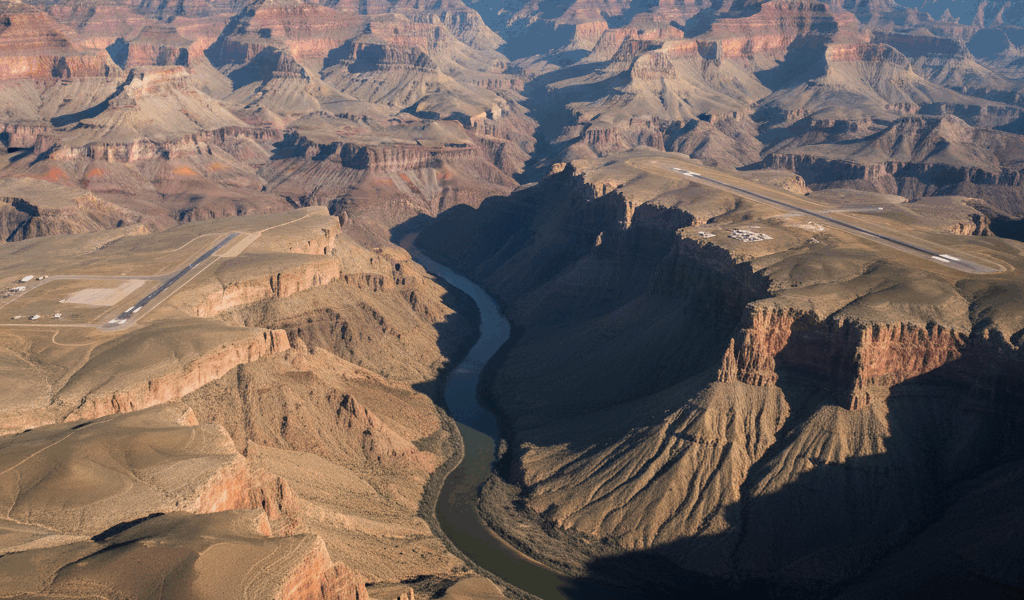
This one sits seven miles from the South Rim — tantalizingly close — but it doesn’t have commercial flights. It’s the base for scenic air tours and helicopter rides over the canyon. Probably should have led with this section, honestly, because a lot of people assume they can fly right to the canyon and get confused when they can’t book a ticket to GCN on United.

If you want to see the Grand Canyon from above, though, this is where those tours depart. And let me tell you, the aerial perspective is something else entirely.

Phoenix Sky Harbor (PHX)

Arizona’s biggest airport, 230 miles from the South Rim. That’s a four-hour drive, no getting around it. But you get every airline under the sun and tons of flight options, including direct flights from practically everywhere in the country.

The drive north through Arizona is honestly worth experiencing in its own right. You pass through Sedona’s stunning red rocks, climb through pine forests as the elevation changes, and watch the landscape transform completely between the desert floor of Phoenix and the canyon’s edge. I’ve done this drive three times now and it never gets old.

If flexibility and flight options matter more to you than minimizing drive time, Phoenix is probably your best bet.

Las Vegas McCarran (LAS)

Vegas is under 300 miles from the Grand Canyon and has massive flight availability. Every domestic airline plus international carriers, often at prices that undercut other airports because so many people fly there. That’s what makes the Grand Canyon trip endearing to us budget-minded travelers — you can sometimes find crazy-cheap flights to Vegas and make the drive work.

The drive to the South Rim takes about five hours through desert landscape that has its own stark beauty. You could also visit the West Rim, which is closer to Vegas but isn’t part of the main national park.

A lot of people combine a Grand Canyon trip with a few days in Las Vegas. If that’s your plan, flying into LAS makes perfect sense.

Smaller Regional Options

Prescott Municipal Airport is about 130 miles away and handles charter flights. Page Municipal Airport serves the North Rim area if that’s your destination. These work if you’re arranging private aviation or have very specific routing needs.

Ground Transportation

  • Rental cars: Available at all major airports. You’ll want one unless you’re on a guided tour that includes transportation — independence matters out here.
  • Shuttle services: Run from Phoenix and Las Vegas directly to Grand Canyon hotels. Book ahead, especially during peak season when they fill up fast.
  • Scenic flights: Tours from GCN, Las Vegas, or Phoenix let you see the canyon from above without driving at all. Different experience, equally incredible.

Cost and Timing

Flights to Vegas often run cheaper than flights to Phoenix, but always check both — pricing fluctuates more than you’d expect. Summer months bring more tourists and higher prices across the board. Book early if you’re traveling June through August or during spring break — last-minute deals are rare for Grand Canyon trips.

Winter visits mean smaller crowds and lower prices, which is genuinely appealing. But some facilities close during the cold months, and weather can seriously affect the drive. November through February is a real trade-off that comes down to your priorities and tolerance for uncertainty.

Planning Tips

  • The Grand Canyon gets millions of visitors annually. Lodges inside the park book months ahead — I’m talking six months or more for peak season.
  • Check weather forecasts carefully. Arizona weather varies dramatically by elevation and season, and what’s pleasant in Phoenix can be freezing at the rim.
  • Build in extra time for the drive. You’ll want stops along the way, whether that’s Sedona, the Hoover Dam, or just a roadside viewpoint that catches your eye.

Which Airport to Choose

If you want the shortest drive: Flagstaff.

If you want the most flight options: Phoenix or Las Vegas.

If you’re combining with other destinations: depends entirely on what else you’re doing.

No single perfect answer exists here. But any of these airports gets you to one of the most impressive natural landmarks on the planet, so you honestly can’t go wrong. The Grand Canyon delivers no matter how you get there — I promise you that.

Recommended Aviation Gear

David Clark H10-13.4 Aviation Headset – $376.95
The industry standard for aviation headsets.

Pilots Handbook of Aeronautical Knowledge – $25.42
Essential FAA handbook for every pilot.

As an Amazon Associate, we earn from qualifying purchases.

Mike Rodriguez

Mike Rodriguez

Author & Expert

Frequent flyer and travel writer with over 2 million miles logged. Reviews airport lounges, terminals, and travel experiences. Former airline operations manager.

51 Articles
View All Posts