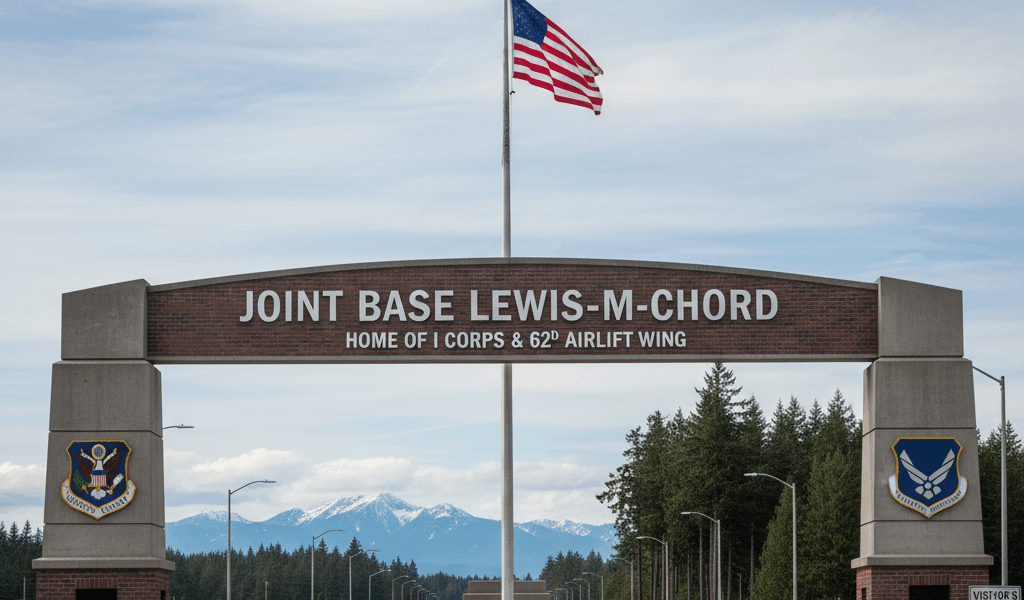
Today, I will share it all with you.
I can’t tell you how many times his care packages and mail went to the wrong place before we finally figured out the zip code situation. Three different zips for one base? Who designed this system? But once you understand the logic behind it, things start making sense. Sort of.

Three Zip Codes, One Base — Why?
JBLM uses 98433, 98438, and 98439. Each covers different parts of the installation, and mixing them up creates real headaches. Trust me on this one — I watched it happen in real time for months.
98433 — The Army Side (Fort Lewis)
This is where most Army operations happen. If you’re mailing anything to the Fort Lewis portion of the base, 98433 is probably your answer. It covers:
- Most on-base housing where families live
- Madigan Army Medical Center
- A bunch of administrative buildings
- Basically anywhere the Army runs things on the installation
For most people stationed at JBLM, this is the zip they’ll use day-to-day for everything from Amazon orders to official paperwork. It’s the workhorse of the three codes.
98438 — The Air Force Side (McChord Field)
This one’s for McChord Field — the Air Force area focused on airlift missions and logistics. If someone works around the airfields or in Air Force administration, their address probably uses 98438. Different branch, different zip. Makes sense once you know the history of how the base came together, I guess.
98439 — The Northwest Corner

This one’s a bit of a grab bag — some housing areas, some work areas, access to training grounds. It’s the northwest section of the installation and comes up less frequently than the other two, but you’ll definitely run into it if you spend enough time dealing with JBLM addresses.
Why This Even Matters
Look, I get it — zip codes are about as exciting as watching paint dry. But getting the wrong one on a package at JBLM can send it bouncing around the military mail system for days. The system is efficient when addresses are right, but it’s also really specific about where things go.
Same deal applies to:
- Amazon orders (already tricky enough on base as it is)
- Bank paperwork and financial documents
- Vehicle registration forms
- Setting up utilities when you PCS there
- Medical appointment scheduling and records
The zip code determines which systems process your stuff. Mix them up, and everything gets delayed. My cousin’s care package from home sat somewhere in postal limbo for two extra weeks because we used the wrong zip.
The Backstory
Here’s the thing most people don’t realize — JBLM wasn’t always one unified base. Fort Lewis and McChord Air Force Base used to be completely separate installations with their own postal systems, their own culture, their own everything. In 2010, they merged into Joint Base Lewis-McChord, but the zip codes stayed the same.
Makes sense when you think about it practically. Why overhaul a working postal infrastructure when it’s functioning fine? So now you’ve got two military cultures sharing a fence line but keeping their original mail systems. It’s very military in that way — functional but confusing to outsiders.
The Surrounding Area
JBLM sits across Pierce and Thurston counties in Washington state. The base has tight connections to nearby towns — Lakewood, Lacey, Tacoma. If you’re looking for off-base housing, those communities are where most military families end up settling, and each has its own vibe and price range.
Local businesses and delivery services in the area know the drill with base zip codes — they’ve been dealing with it for years. But if you’re ordering from somewhere that doesn’t handle military addresses regularly, be super specific with your address formatting. Don’t assume they’ll figure it out.
Some Tips That Actually Help
- When in doubt, ask your unit. They’ll know exactly which zip to use for official mail and can save you the guesswork.
- Save the right zip on your phone. You’ll enter it constantly — housing paperwork, utility setup, everything requires it.
- Package taking forever? Double-check if the zip matches where it’s actually supposed to go. Nine times out of ten, that’s the issue.
- GPS acting weird? Base addresses confuse navigation apps all the time. Having the correct zip helps the algorithm sort things out and actually get you where you need to be.
The Short Version
98433 for Army stuff. 98438 for Air Force. 98439 for the northwest area. Keep those three numbers straight and life at JBLM gets noticeably easier — I promise you that.
Not exactly exciting information, I know. But after watching my cousin’s mail situation unfold for six months, I’m completely convinced that getting this right from day one saves a surprising amount of frustration down the road. Consider this your crash course.
Recommended Aviation Gear
David Clark H10-13.4 Aviation Headset – $376.95
The industry standard for aviation headsets.
Pilots Handbook of Aeronautical Knowledge – $25.42
Essential FAA handbook for every pilot.
As an Amazon Associate, we earn from qualifying purchases.


Stay in the loop
Get the latest airport guides world updates delivered to your inbox.