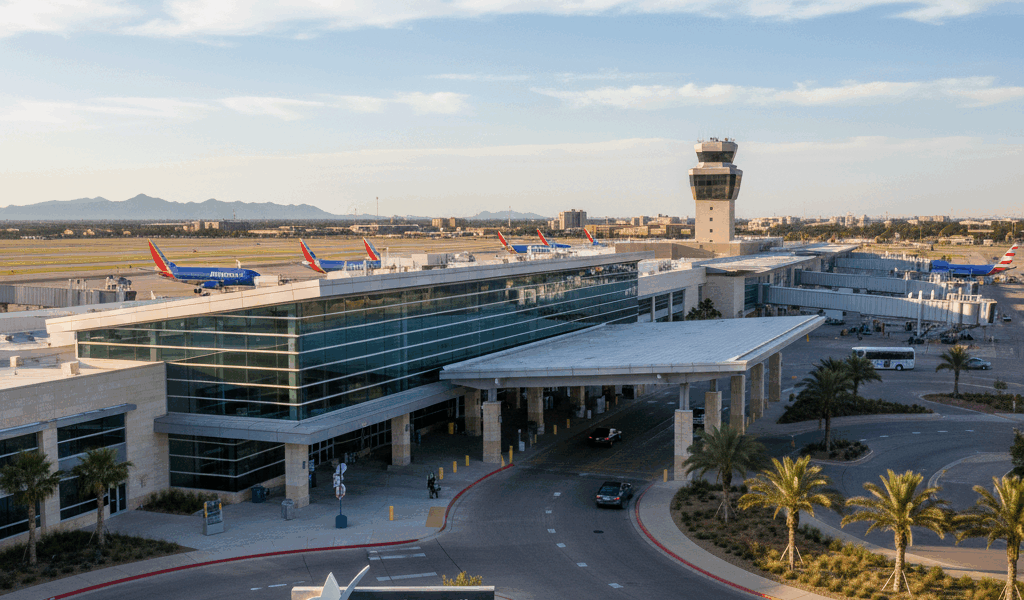
McAllen Airport: The Border Town Hub That Works
McAllen International sits just a few miles from the Mexican border in South Texas, and I have to say – it’s one of those airports that flies under the radar but actually does its job well.
MFE is the code, if you’re looking it up. Not huge, not fancy, but surprisingly convenient for the Rio Grande Valley region.
Some History (Don’t Worry, I’ll Keep Moving)

The first runway opened in 1934, which feels like ancient history. Started with just domestic flights and slowly grew over the decades. They’ve expanded terminals, modernized tech, added international connections – the usual evolution.
What’s interesting is how it grew alongside the region. As McAllen developed, the airport kept pace. Local government and federal funding have pushed through improvements over the years. It’s not the prettiest story, but it works.
What It’s Actually Like Flying Through Here
The terminal is modern enough. You’ve got your retail shops, food options with both local Mexican cuisine and international brands, free Wi-Fi throughout. Nothing that’ll blow your mind, but everything you actually need.
TSA follows standard protocols here – no special exceptions. They do offer PreCheck, which helps during busy periods. Security lines are usually manageable since it’s not a massive hub, but I’d still give yourself buffer time during holidays.
Getting There and Parking
MFE sits near major highways, so driving in is straightforward. Parking options include long-term, short-term, and economy lots – prices are reasonable by airport standards.
Rental cars from the usual suspects are available right at the terminal. Taxis, Uber, Lyft – all the ground transportation you’d expect runs 24/7. Shuttle services connect to nearby hotels and resorts, which is nice if you’re visiting the area.
Where Can You Actually Fly?
Several major airlines operate here: you can get direct flights to Dallas, Houston, Las Vegas, and seasonal routes to vacation destinations. The Mexico connections are obviously a big deal given the location – cross-border travel for business and tourism is a huge part of what this airport does.
They keep adding routes as demand grows. Not as many options as a major hub, but you can connect to basically anywhere from Dallas or Houston.
The Economic Side (It’s Bigger Than You’d Think)
This airport matters for the region. Thousands of jobs, tourism dollars flowing in, business travelers coming and going. It’s also a logistics hub for cargo – trade between the US and Mexico moves through here.
The cargo facilities have expanded to handle more volume, which makes sense given McAllen’s position on the border and proximity to manufacturing zones in both countries.
Environmental Stuff
They’re making efforts – energy-efficient terminal designs, waste reduction programs, noise reduction tech for the neighbors. Solar panels and renewable energy are apparently being explored.
Whether it’s enough to really make a difference? That’s a bigger question. But at least they’re thinking about it, which is more than some airports do.
What’s Coming Next
Expansion plans include more runway capacity and terminal growth to handle more passengers. Technology upgrades are ongoing – smarter systems to improve operations and passenger experience.
The goal seems to be keeping up with regional growth. South Texas is developing, and the airport is trying to stay ahead of demand.
My Tips If You’re Flying Through
- Show up early during peak travel seasons. Security isn’t usually crazy, but it can back up.
- Check the website for real-time updates before you head to the airport.
- Book ground transportation in advance if you need it – especially during busy periods.
- Know the TSA rules. Seems obvious, but I’ve watched people hold up lines over water bottles.
- The terminal amenities are decent – use them. Better than sitting at your gate for two hours.
Bottom Line
McAllen International handles a ton of passengers every year and does it reasonably well. It’s not going to win any “world’s best airport” awards, but it connects South Texas to everywhere else efficiently.
For a regional airport, that’s honestly all you can ask for.
Recommended Aviation Gear
David Clark H10-13.4 Aviation Headset – $376.95
The industry standard for aviation headsets.
Pilots Handbook of Aeronautical Knowledge – $25.42
Essential FAA handbook for every pilot.
As an Amazon Associate, we earn from qualifying purchases.



Stay in the loop
Get the latest airport guides world updates delivered to your inbox.