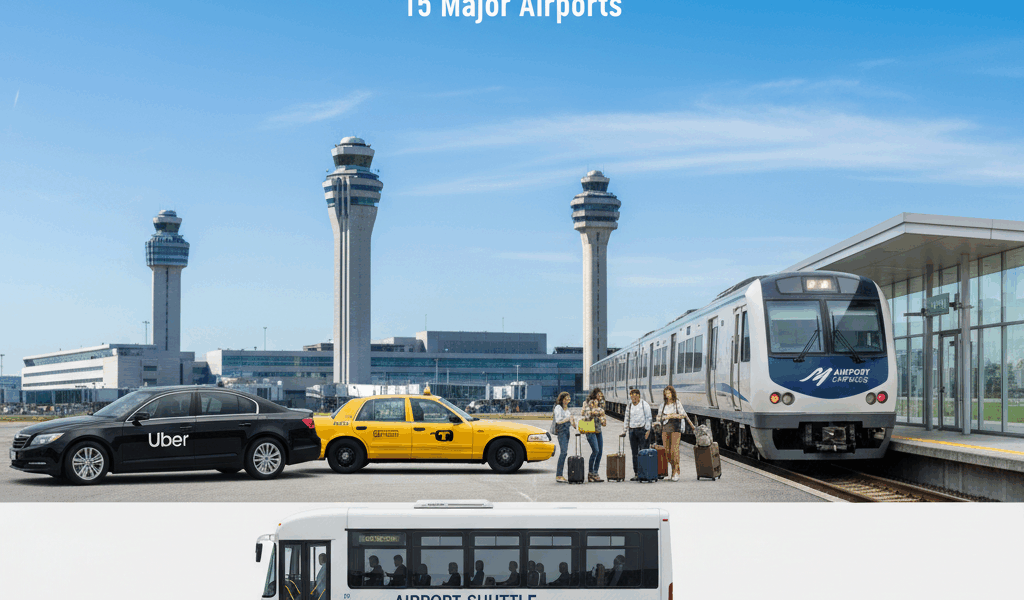
Airport operations have gotten complicated with all the changes and updates flying around. As someone with extensive travel experience, I learned everything there is to know about this topic. Today, I will share it all with you.
The “which transportation option should I use at the airport” question comes up every single trip. I’ve tried them all at this point: taxis, Uber, rental cars, hotel shuttles, trains, buses. None of them is universally best, which is annoying but true.
Here’s what I’ve learned from making this decision hundreds of times.
Taxis vs Rideshares
Traditional Taxis
Taxis still exist, and sometimes they’re the right choice. Regulated, metered, and available without downloading an app or waiting for surge pricing to settle down.
Use taxis from official stands only. The guys approaching you inside the terminal are not your friends. Check posted rates before getting in. Most airports show approximate fares to popular destinations on signs near the taxi queue.
I grab taxis when my phone is dead, when Uber is surging 3x, or when I’m somewhere international where rideshare apps don’t work reliably.
Uber and Lyft
Rideshares usually cost less than taxis and show you the price before you book. Designated pickup zones have made finding your driver easier than the early days when you’d wander around a parking garage trying to match license plates.
Two warnings: First, verify rideshares actually operate at your destination airport. Some places ban them or restrict where they can pick up. Second, international travel means different apps. Grab in Southeast Asia, Didi in China, Bolt in Europe. Download before you land.
Public Transit
Airport Express Trains
London’s Heathrow Express, Hong Kong’s Airport Express, Tokyo’s Narita Express. These services exist specifically to get people from the airport to the city center fast.
Usually more expensive than regular trains but way faster, running every 15-20 minutes and reaching downtown in under half an hour. During rush hour, trains often beat cars stuck in traffic.
Book online ahead of time for discounts. Standing in line at the ticket counter costs more and wastes time.
Regular Metro and Subway
If the city’s metro connects to the airport, this is often the cheapest option. Quality varies wildly though. Some connections are seamless. Others involve hauling luggage up stairs, across platforms, through crowds.
Research your specific route before landing. Google Maps or Citymapper will show you exactly what’s involved.
Buses
Airport buses range from cheap city routes that take forever to premium express coaches that rival trains. Know which one you’re getting on.
Public buses work if you’re budget-conscious and patient. Express coaches work if your destination is on their route. Both struggle with rush hour traffic.
Private Options
Pre-Booked Cars
Driver meets you at arrivals with a sign, helps with bags, drives you directly to your hotel. Costs more than everything else but eliminates all the figuring out.
I use this when arriving late at night in unfamiliar cities, when traveling for business where time matters more than money, or when I’m too tired to deal with anything.
Shared Shuttles
Services like SuperShuttle split the cost among passengers heading the same general direction. Cheaper than private cars, more convenient than public transit.
Downside: you’re on someone else’s schedule, making stops you don’t care about. Works best when your destination is along a popular route.
Rental Cars
On-Airport Rentals
Convenient but expensive. Airport surcharges add 20-30% to rental costs. Book ahead for better rates and actual vehicle availability.
Rental cars make sense when you need a car for your trip anyway. If you’re just getting to a hotel and back, probably not worth it.
Off-Airport Rentals
Companies located outside airport property often cost significantly less because they avoid airport fees. They shuttle you there for free. Takes more time, saves real money on longer rentals.
Hotel Shuttles
If your hotel offers free airport shuttle service, use it. Confirm pickup procedures before you land. Some run on schedules, some require calling when you arrive.
The quality varies from cramped vans to comfortable coaches. Either way, free is free.
How to Decide
Questions I ask myself every time:
- How much do I want to spend?
- How much time do I have?
- How much luggage am I carrying?
- Am I alone or with a group?
- Is my destination on a direct transit route?
- What time am I arriving?
Late night arrivals in unfamiliar cities: private car or taxi. Daytime arrivals with good transit connections: train or metro. Budget constraints with time flexibility: public bus. Need a car anyway: rental.
There’s no single right answer. But knowing your options means you won’t default to whatever’s most obvious while spending more than you need to.




Stay in the loop
Get the latest airport guides world updates delivered to your inbox.