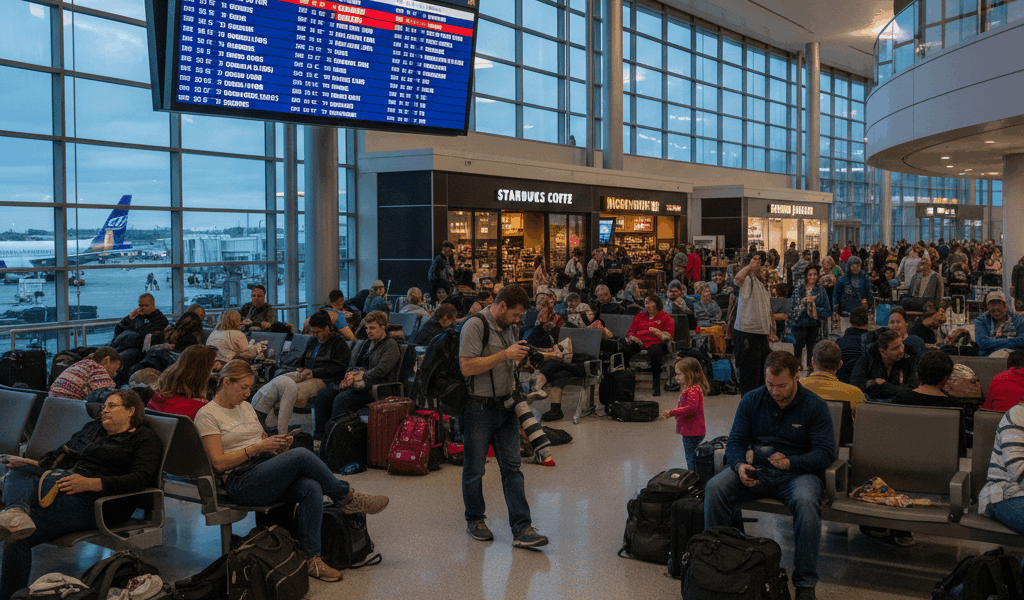
Hub airport rankings have gotten complicated with all the size comparisons, delay statistics, and “best airport” lists flying around. Today, I will share it all with you.
Size matters in aviation, sure—but not in the way most people think. I’ve had smoother connections at supposedly “smaller” airports than at massive hubs where everything should work perfectly but doesn’t.
The Top 10 US Airports by Passenger Volume
1. Atlanta Hartsfield-Jackson (ATL): Everyone complains about Atlanta being crowded. And yeah, 90 million passengers a year is insane. But here’s my hot take—I actually don’t mind connecting here. That train system works. The parallel concourses make sense. Delta runs a tight ship, and somehow the place just functions. I’ve had fewer missed connections here than at airports half its size.
2. Dallas-Fort Worth (DFW): This airport is massive—17,000 acres massive. I got lost here my first time. But once you figure out the Skylink train? It’s actually pretty smooth.
3. Denver International (DEN): That weird tent roof thing always makes me smile. DEN is newer than most major hubs, and you can tell. United basically lives here, so connections are usually well-coordinated. Also, being in the middle of the country means fewer weather nightmares.
4. Chicago O’Hare (ORD): The infrastructure feels old because it is old. When weather hits the Midwest, delays pile up fast and cascade through the whole system. I once sat on the tarmac here for three hours because of a thunderstorm in Missouri. Three hours.
5. Los Angeles International (LAX): LAX is challenging. The terminals don’t connect well, construction seems eternal, and making connections can feel like running a marathon. They’re working on it, supposedly. But right now? I avoid connecting here if I can.
Real Talk About Delays
Weather patterns affect airports differently, and understanding this has saved me so much frustration.
The good ones: Salt Lake City, Phoenix, Las Vegas—these airports benefit from desert weather. It just doesn’t storm as much. Their on-time numbers consistently beat national averages, and it’s not because they’re better run. They just have better luck with the sky.
The tough ones: Newark might be the most frustrating airport in America. San Francisco has that fog problem everyone jokes about. LaGuardia is cramped and the airspace over New York is perpetually congested.
How I Actually Book Connections Now
Winter travel? I aim for southern or western connection points. Atlanta, Dallas, Denver—these handle snow better than Chicago, New York, or Philly. Learned this the hard way after getting stuck in Philadelphia during a nor’easter.
Summer trips? Avoid afternoon connections through Florida or the Gulf Coast. Those afternoon thunderstorms roll in like clockwork between 2 and 7 PM. Book morning flights, get out before the storms build up.
Here’s my biggest tip though: fly early. Like, 6 AM early. Yeah, it’s painful. But overnight, planes get repositioned and everything resets. By afternoon, delays have compounded and one late flight cascades into chaos.
What Actually Matters (It’s Not Size)
Terminal design trumps total airport size every time. Atlanta processes way more passengers than LAX with fewer connection disasters. Why? Because someone actually thought about how people would move through the space.
Airline efficiency at their hubs varies wildly too. Delta’s Atlanta operation runs like a machine. United’s Newark hub doesn’t. Same passenger volumes, wildly different experiences. Worth researching before you book.

Stay in the loop
Get the latest airport guides world updates delivered to your inbox.