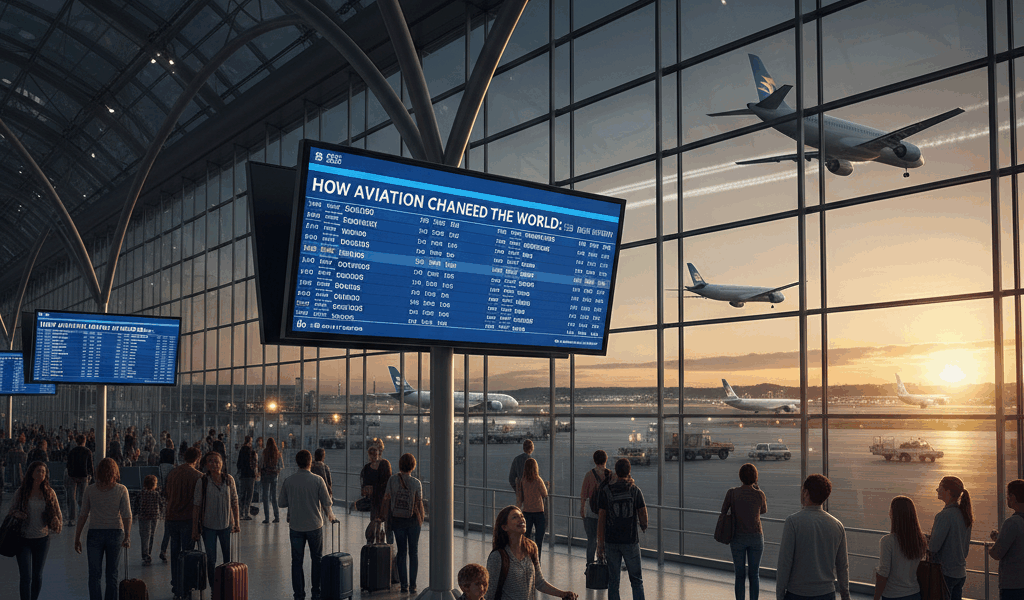
How Aviation Changed Everything (And Why It Still Matters)
Think about this: your grandparents generation thought crossing an ocean was a major life event. Now we complain about long layovers. That shift happened in basically one century, and it changed… well, everything.
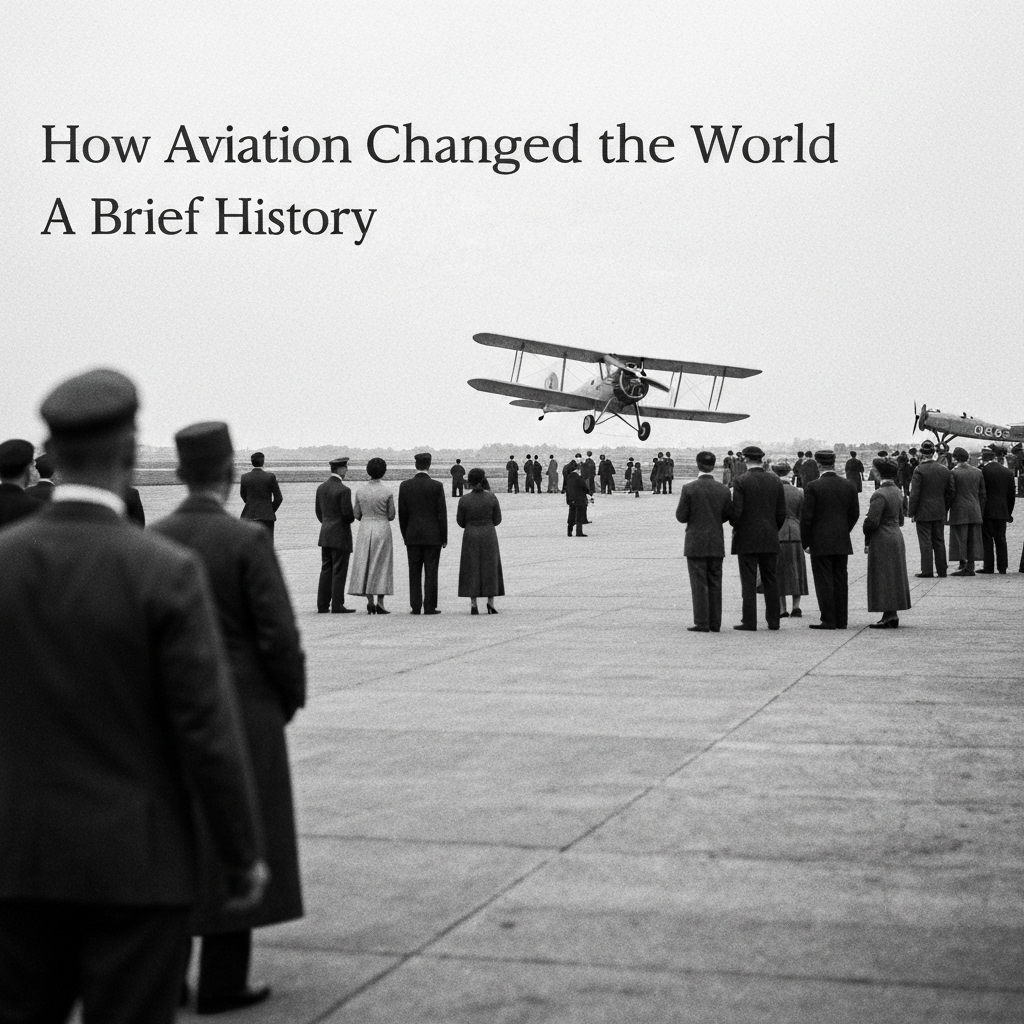
From Kitty Hawk to Global Networks
December 17, 1903 – Orville Wright flew 120 feet in 12 seconds. That is it. That was the beginning. Within a decade, planes were fighting in wars. Within 50 years, jets were crossing oceans. Within 70 years, we put people on the moon using technology that evolved from those early flight experiments.
The pace of that development is insane when you think about it. Humans spent thousands of years dreaming about flight, then achieved it and mastered it within a single human lifetime.
World War I: When Aviation Became Serious
The military value of aircraft became obvious fast. Surveillance, bombing, air-to-air combat – all emerged during WWI. This meant massive investment in aviation technology. Governments poured money into research and development. After the war, all that infrastructure and knowledge needed somewhere to go.
Commercial aviation was born partly from military surplus. Pilots trained for war needed jobs. Planes built for combat got repurposed. And suddenly the idea of flying somewhere as a regular person became possible.
The Golden Age (1930s-1960s)
The Douglas DC-3 changed the economics. Before it, airlines basically survived on mail contracts. The DC-3 could actually make money carrying passengers alone. More demand meant bigger airports, better infrastructure, the whole ecosystem we recognize today.
Air travel was expensive and glamorous. You dressed up to fly. Meals were real meals. Legroom existed. It was an experience, not just transportation.
Then jet engines arrived. The Boeing 707 cut transatlantic flight times in half. Suddenly business people could fly to Europe, have meetings, and return in the same week. International business became routine rather than exceptional.
Deregulation and Mass Travel
1978 Airline Deregulation Act in the US changed everything again. Government stopped controlling routes and prices. Competition exploded. Fares dropped dramatically. Flying stopped being a luxury and became accessible to middle class families.
Southwest Airlines showed you could strip out the frills and offer cheap seats. The whole industry adapted. More passengers meant more planes, more airports, more routes.
Post-9/11 Reality
September 11, 2001 transformed airport security completely. TSA replaced private screeners. ID requirements, shoe removal, liquid restrictions, reinforced cockpit doors – all came from that moment. Arrive two hours early became standard advice.
Security theater debates aside, the industry adapted. It is now just part of flying, annoying but accepted.
Where We Are Now
Aviation today handles over 4 billion passengers annually. It connects basically every significant city on Earth. The industry enables global supply chains, international business, tourism economies, family visits across continents.
Challenges exist – carbon emissions, aging infrastructure, capacity constraints at major hubs. Airlines are investing in sustainable aviation fuel and more efficient aircraft. Airports are expanding and modernizing. The system keeps adapting.
What is Next
Electric aircraft for short routes are being tested. Supersonic is coming back, targeting business travelers. Urban air mobility – basically flying taxis – might actually happen. Biometric screening replacing boarding passes is already rolling out.
The next 20 years could see as much change as the last 50. Or not. Predictions about aviation have been wrong before.
Why This Matters
Aviation is not just about getting from A to B. It fundamentally shaped the modern world – global economy, international relations, cultural exchange, how families stay connected across distance. Understanding its history helps explain why things work the way they do.
Next time you are stuck in a middle seat eating pretzels, remember: your great-grandparents would have considered this magic. We went from 12 seconds at Kitty Hawk to mundane complaints about WiFi speed on transatlantic flights. That is actually pretty remarkable.

Stay in the loop
Get the latest airport guides world updates delivered to your inbox.