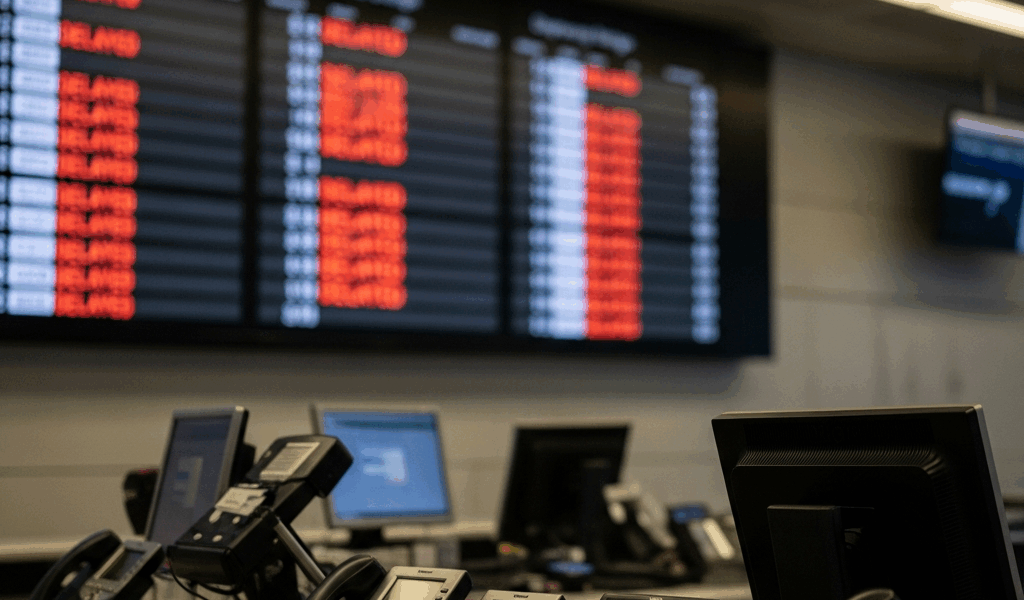
The First Thing You Should Do Right Now
Missed connections have gotten complicated with all the conflicting advice flying around. Stay put. Run to customer service. Call the app. Everyone has an opinion. Here’s what actually works in the first 30 minutes: don’t move toward baggage claim. Stay in the gate area.
My inbound flight landed 20 minutes late. I grabbed my carry-on, sprinted the full length of Concourse B, and arrived at the next gate just in time to watch an agent mark me as a no-show. Had I stayed five minutes at my arrival gate, I could have walked directly to the agent standing right there. Done. That was gate B14, and I still think about it.
The gate agent at the flight you just missed is your first call — not the main ticketing counter three terminals away, not the airline app, not the 1-800 number. That agent has real-time access to your booking, knows what seats exist on upcoming flights, and can initiate a rebooking on the spot. They handle missed connections constantly. They know the drill better than anyone.
Walk to the gate desk. Wait your turn. You’ll probably see other passengers doing the same thing, which is actually a good sign — it means the agent is already in problem-solving mode. That first 30-minute window is when your options are widest, and the airline’s system still has you flagged as a missed connection rather than a no-show.
One Ticket vs. Two Bookings Changes Everything
Before you say a word to anyone, you need one piece of information. This single detail determines whether the airline legally owes you anything at all.
If both flights are on one itinerary: You booked them together. One confirmation number covers everything. The airline is responsible for rebooking you on the next available flight at no charge — even if that flight isn’t until tomorrow morning. Meals, hotel accommodations, ground transportation. Non-negotiable. You have real rights here.
If you booked two separate tickets: Two independent purchases. Two different confirmation numbers. The airline has zero obligation to rebook you or cover a hotel room. To them, you’re just a passenger on the second flight who didn’t show up. You’d need a new ticket, out of pocket, at whatever today’s fare happens to be.
A lot of travelers genuinely don’t realize they’ve made two separate bookings. Maybe your company booked the first leg and you grabbed the second one separately because the price was better on another site. Maybe you bought them three hours apart. The airline doesn’t care about your reasoning — to their system, those are completely unrelated transactions.
Check your email right now. If you see “Itinerary Receipt” with both flights on the same confirmation, you’re on one ticket. If you see two separate booking confirmations with different reference codes, you made two separate purchases. That distinction is everything you’re about to negotiate around.
How to Talk to the Airline — and What to Actually Ask For
Frustrated by delays and gate chaos, most passengers arrive at the agent either furious or completely defeated. Neither works. Specificity works.
Here’s what to say, word for word: “I missed my connection on Flight [number]. I have a confirmed reservation to [destination]. What are my options for getting there today?” That’s it. Clean, calm, specific.
If the next flight has seats, you’ll be rebooked in about two minutes flat. If it doesn’t, ask about the flight after that. Ask about partner airline options — at a major hub, that matters. Ask about first thing tomorrow if today is genuinely gone.
Then ask for these specific things, one at a time:
- Meal vouchers for the airport restaurant or concourse vendor — usually $10–15 per meal, sometimes up to $20 at larger hubs
- Hotel accommodations if you’re stuck overnight — the airline books this directly, no upfront cost to you
- Ground transportation to the hotel and back to the airport the next morning
- Lounge access if you hold elite frequent flyer status on that carrier
Tone matters more than most people expect. I’ve watched passengers get rebooked on flights that supposedly showed zero availability moments earlier — the only variable was how they spoke to the agent. Gate agents have real discretion. That’s worth something.
One tactical note: if the gate area is total chaos, skip the desk queue entirely. Open the airline’s mobile app right now. United, Delta, and American can all rebook missed connections through the app faster than a counter agent sometimes. If the app stalls, call the airline’s phone line while you’re still physically near the gate — phone reps occasionally see different availability than desk agents do, which sounds absurd but happens constantly.
When the Missed Connection Was the Airline’s Fault
If your inbound flight was delayed because of a mechanical issue, a crew problem, or a late-arriving aircraft, the situation shifts in your favor.
Under Department of Transportation rules for domestic travel, you’re entitled to rebooking on the next available flight at no cost. That’s the floor. But when the delay was carrier-caused, they’re also on the hook for reasonable accommodations — and those specifics scale with how long you’re actually stranded.
Delays over three hours: you can ask for meals, hotel, and ground transportation. Missing an overnight connection entirely because of an airline delay? The hotel is non-negotiable at that point. Keep receipts for anything you pay out of pocket — reimbursement isn’t guaranteed fast, but having documentation gives you options.
International flights to or from Europe are a different world. EU261 regulations require compensation between €250 and €600 depending on the total flight distance, and that applies even when the airline rebooks you promptly. You’ll need to claim it separately — either through the airline’s own website or through a third-party service that typically takes 25–30% of the payout as a fee.
Document everything. Photograph the delay announcement board, your boarding pass, and the rebooking confirmation. Email yourself a quick summary within the hour. You’re building a paper trail in case reimbursement gets complicated later.
How to Avoid This Happening Again
Probably should have opened with this section, honestly. Prevention is a lot cheaper than fixing things at the gate.
Minimum connection times vary a lot by airport. Atlanta and Dallas need at least 90 minutes between domestic flights — those are sprawling, and the trams get crowded. Smaller regional airports can work with 60 minutes. International connections involving customs or immigration need a minimum of two hours, and even that can feel tight at JFK or LAX.
TSA PreCheck runs $78 for five years — roughly $15 a year. If you fly more than once or twice annually, that math works easily. You keep your shoes on, leave the laptop in the bag, and save 15–20 minutes on average through security. I’m apparently a slow unpacker without it, and PreCheck works for me while standard lanes never quite do. Don’t make my mistake of waiting three years to sign up.
Book the first flight of the day when you can. Early morning departures carry fewer cascading delays. A 7 a.m. flight that gets pushed back 40 minutes still gives you most of the day to recover. A 5 p.m. delay is a different problem entirely.
One more thing worth knowing: book your connections on the same airline whenever possible. Different carriers won’t rebook you for free on a competitor’s flight — that’s not how interline agreements work for most domestic itineraries. One ticket, one airline, across all your legs. That keeps you protected when something goes sideways.

Stay in the loop
Get the latest airport guides world updates delivered to your inbox.