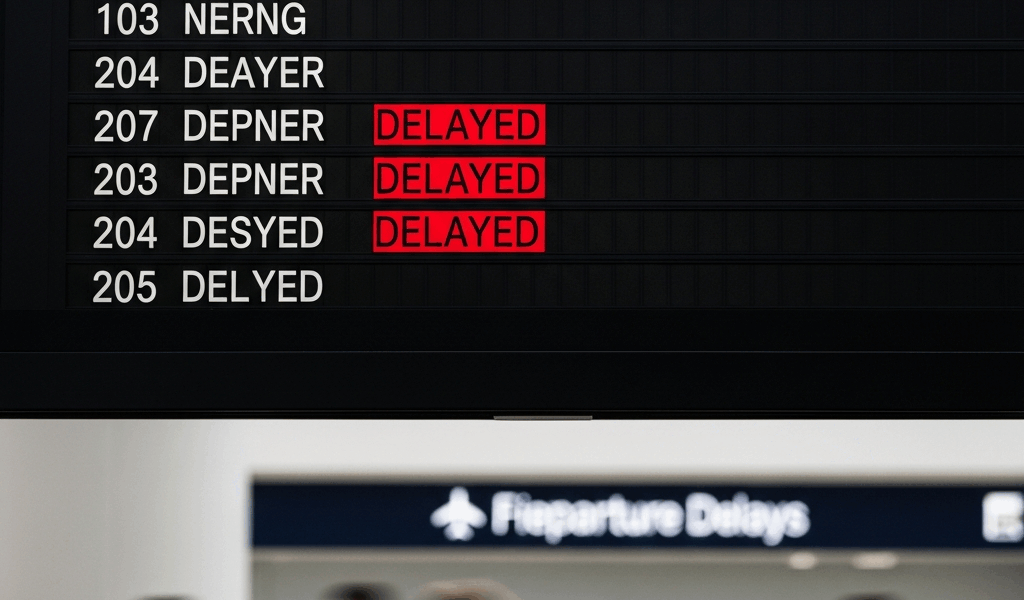
Notify the Flight Attendant Immediately If You Realize the Connection Is Tight
How to handle a connecting flight when your first leg is late — honestly, it starts the moment you suspect it might happen. Don’t wait until landing. The crew has more pull than you’d think, and they can actually do something about it.
When I realized mid-flight from Denver to Atlanta that our 45-minute connection window was evaporating, I hit the call button. The flight attendant — this woman who’d clearly handled this situation dozens of times before — asked for my connecting gate number, airline, and destination city. She radioed the gate agent on the ground before we even touched down. That single radio call changed everything.
Ground crew can hold a gate open for another 2–5 minutes if the incoming flight alerts them properly. They won’t hold it indefinitely, but they will buy you time. Have this information ready before you even ask:
- Your connecting flight number (e.g., United 447)
- The airline operating it (sometimes different from your first flight)
- Your final destination
- Passenger name and confirmation number
For international connections, notify crew if you’re transiting through customs or immigration. TSA or border agents occasionally expedite passengers from a tight connection, but only if airport staff has flagged you as a priority. The crew’s alert gets you into that system.
Probably should have opened with this section, honestly — it’s the highest-impact action you can take while still airborne.
Check Your Connecting Flight Status Before You Land
Most modern aircraft have seatback displays. Open your airline’s app. Ask the flight attendant if you can’t find it yourself. Do this 15–20 minutes before landing, not when you’re taxiing in.
You’re looking for three statuses:
- On-time — boarding or about to board. If you have 20+ minutes remaining, you’re likely okay.
- Delayed — pushing back later than scheduled. This is actually good news for you.
- Boarding or Final Call — they’re closing the jetway soon. Your odds drop significantly.
Gate changes happen constantly on connections. The display might show Gate B7 now and Gate A2 in five minutes. Screenshot or write down the gate, but don’t rely solely on that number. Use the airport’s live app or ask an agent at your arrival gate — they have the most current intel.
If your app shows your connecting flight already departed, don’t panic yet. Sometimes the system lags by 5–10 minutes. The gate agent or crew can confirm whether the jetway is still open when you land.
Move Fast Through the Airport, But Know Your Options
This is where panic costs you time. You have three paths forward, not one.
Sprint to the gate if your connection is domestic US and you have TSA PreCheck or Clear. Clear (the expedited security line membership) saves 20–40 minutes alone. If you don’t have it and you’re in a major hub, TSA PreCheck trims maybe 10 minutes off a standard security line. Without either, expect 15–25 minutes through standard security — which means you’re likely missing your flight.
Your bags are checked through to your final destination in most cases. You only need to get yourself to the gate. Move. Use the moving walkways. Run if necessary.
Walk — don’t run — if you have 15+ minutes after landing. You’ll arrive breathless and stressed, which impairs judgment. Collect yourself. Ask an agent immediately where your gate is and whether the jetway is open.
Request wheelchair assistance if available. I’m serious about this. Airport wheelchairs bypass standard corridors. An agent will push you directly to your gate. Most airports have this for mobility issues, but stressed connecting passengers can often request it. This is strategic, not cheating — you’re using the airport’s own systems.
If you miss your original gate but see your flight still boarding at another gate, run to that gate, not to rebooking. You have seconds, maybe a minute.
Standby strategy: If your flight has departed or is closing, consider asking to go standby on the next flight instead of taking an airline-assigned rebooking to a flight 6+ hours later. Standby prioritization favors same-day connections and paying passengers. You might catch a flight 90 minutes later rather than waiting until evening. The airline won’t suggest this — you have to ask.
If You Miss Your Connection, Understand Your Airline’s Rebooking Rules
You missed the gate. Now what.
Head straight to the ticketing counter or customer service desk for your airline — not a random gate agent. This matters for two reasons: ticketing has rebooking authority, and they’ll generate the official rebooking documentation you need for compensation claims.
Explain your situation clearly: “My flight from Denver was delayed, and I missed my connection to Atlanta. I need to be rebooked.” They’ll check available flights.
Airlines distinguish between two types of delays:
- Airline fault (mechanical issue, crew shortage, oversold flight) — they must rebook you on the next available flight, hotel, meals, and ground transportation at no cost.
- Force majeure (weather, air traffic control, security incident) — they must rebook you, but hotels and meals are on you unless the delay extends past a certain threshold (usually 12+ hours).
The delay to your first flight might have been weather — not the airline’s fault. That’s frustrating, but it shapes what they owe you. Push back politely if they offer a rebooking 18+ hours away without amenities. Ask to speak to a supervisor.
In the US, DOT regulations require airlines to rebook you on the next available flight, even with a competitor, if their flight boards within one hour. In Europe, EU261 rules are stricter — you’re entitled to compensation (€250–€600) if the connecting flight was part of a single booking and the delay was airline-caused.
Write down the rebooking confirmation number, the new flight number, and the airline representative’s name. You’ll need this.
Document Everything for Potential Compensation Claims
Most travelers don’t claim compensation because they don’t realize they’re eligible. Airlines won’t tell you.
Photograph or screenshot:
- Your original booking confirmation (the one with both flights)
- Your boarding pass from the first flight (showing departure delay, if applicable)
- The gate information for your missed connecting flight
- The rebooking confirmation with new flight details and times
- Any receipts for meals, hotels, or ground transportation you paid out-of-pocket
- Your itinerary showing the arrival and departure times
The timeline matters. If you arrived at your destination more than 3 hours late on the same day, and the delay chain was airline-caused, you likely have a claim in the US and EU. Weather delays often disqualify claims, but mechanical delays don’t.
Use apps like AirHelp or ClaimCompass. They file claims on your behalf and take a 25–30% cut of the compensation. Or file directly with the airline (their website has a compensation form). Direct filing takes longer but keeps the full amount.
You might have a claim even if the airline doesn’t volunteer one. That’s the point.




Stay in the loop
Get the latest airport guides world updates delivered to your inbox.