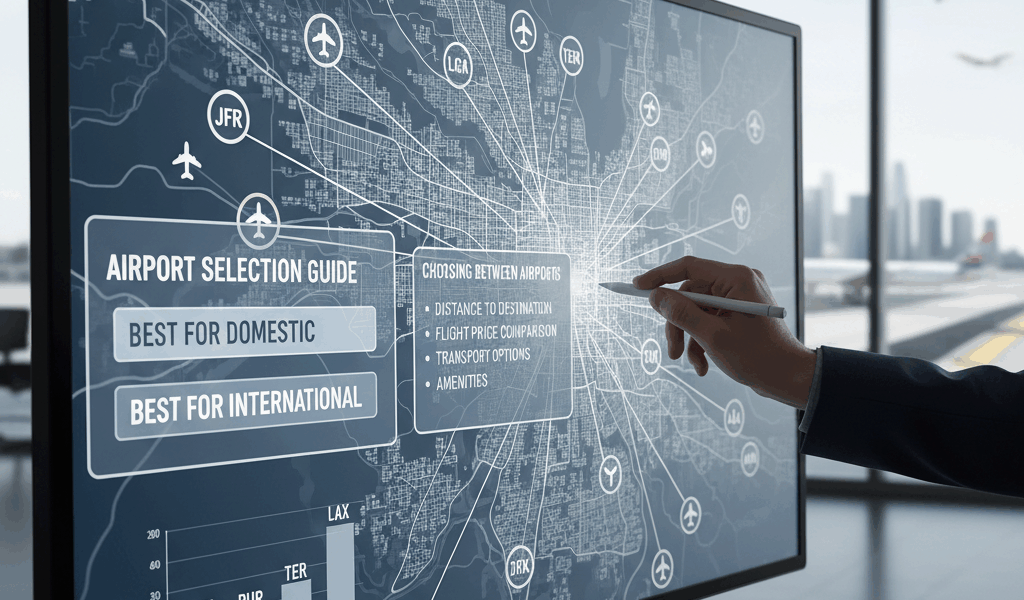
Airport operations have gotten complicated with all the changes and updates flying around. As someone with extensive travel experience, I learned everything there is to know about this topic. Today, I will share it all with you.
Airport choice matters more than most travelers realize. Same city, different airports, completely different experiences. I learned this the hard way after getting stranded at a secondary airport with one daily flight when weather cancelled my connection.
If you live near a metro area with multiple airport options, you’re making decisions that affect your wallet, your time, and your stress levels. Here’s how to think about it.
Multi-Airport Cities Are Common
New York has JFK, LaGuardia, and Newark. Los Angeles has LAX plus Burbank, Long Beach, Ontario, and John Wayne. Chicago offers O’Hare and Midway. The Bay Area splits traffic between SFO, Oakland, and San Jose.
Each airport serves different airlines, has different amenities, and connects to different transportation. Distance from your house is just one factor.
Primary vs Secondary Airports
Big hub airports have tons of flights but come with crowds, long security lines, and expensive parking. Secondary airports offer fewer options but shorter walks, faster screening, and easier navigation.
Southwest dominates many secondary airports. Spirit and Frontier show up too. If you’re flexible on carrier, secondary airports often beat hub pricing by $100+ each way.
The trade-off? Fewer flights means less flexibility if things go wrong. Miss that one daily departure and you’re stuck until tomorrow.
What Actually Matters When Choosing
Flight Availability and Pricing
Always search multiple airports when booking. The Google Flights “airports nearby” feature exists for a reason. I’ve saved hundreds of dollars flying out of Oakland instead of SFO, even factoring in the slightly longer drive.
Non-stop availability matters if time is tight. Hub airports usually have more direct routes. Secondary airports often require connections.
Ground Transportation
Calculate total trip cost, not just airfare. A $150 cheaper flight from an airport that requires $60 in parking and an hour of extra driving isn’t actually cheaper.
Check transit connections before booking. Some airports connect directly to rail. Others require bus transfers or have no public transit at all.
Parking
Long-term parking ranges from $8/day at smaller airports to $35+ at major hubs. Off-site lots near big airports often match secondary airport pricing while giving you access to more flights.
Reserve spots during holidays. Popular economy lots fill up completely around Thanksgiving and Christmas.
Security and Processing
TSA wait times vary wildly. The MyTSA app shows estimates, though accuracy depends on user reports. Smaller airports often process passengers faster despite having fewer lanes.
PreCheck and CLEAR
TSA PreCheck works almost everywhere. CLEAR availability is more limited to larger airports. If CLEAR is part of your routine, verify coverage before committing to a smaller facility.
International Arrivals
Global Entry and Mobile Passport Control availability affects how quickly you clear customs. Major airports support these programs. Some regional airports don’t have the infrastructure.
Amenities
This matters more during long layovers or delays.
Lounges
Major airports have multiple lounges through airlines, credit cards, and day passes. Smaller airports might have one or none. Verify Priority Pass coverage if you’re counting on lounge access.
Food and Shopping
Bigger airports have real restaurants. Smaller airports have food courts that close early. Pack snacks for red-eye departures from secondary airports.
Power and Wi-Fi
Newer terminals have USB ports everywhere. Older facilities make you hunt for outlets. Bring a portable charger and stop worrying about it.
When Things Go Wrong
Hub airports handle disruptions better because they have multiple daily frequencies on popular routes. Cancellation at a secondary airport with one flight per day means overnight stay or ground transportation to somewhere else.
Weather Patterns
Some airports delay more than others. Fog affects SFO constantly. Summer thunderstorms hit Atlanta and Dallas. Check historical on-time performance before booking.
Rebooking
Cancelled flight at a hub? Same-day rebooking usually possible. Cancelled flight at a secondary airport? Maybe not. Consider worst-case scenarios, especially for important trips.
Specific Metro Area Notes
New York
JFK handles international traffic with AirTrain rail access. LaGuardia got renovated and improved but still lacks rail. Newark has PATH train connections and often cheaper fares. Traffic to all three can exceed two hours during rush hour.
Los Angeles
LAX has the most flights but the most hassle. Burbank is Southwest heaven with easy parking. Long Beach offers JetBlue. Ontario works for Inland Empire destinations. John Wayne is convenient for Orange County.
Bay Area
SFO has international options but fog delays. Oakland has Southwest with BART access. San Jose serves Silicon Valley well. Morning fog at SFO usually clears by noon.
Chicago
O’Hare is a major hub with ongoing renovation chaos. Midway is Southwest territory with faster everything. Both have CTA train connections.
Making the Call
No universal answer exists. Business travelers prioritize schedule reliability over savings. Leisure travelers might accept longer drives for cheaper fares.
For new routes, research carefully. For familiar routes, trust experience.
Technology makes comparison easy. Flight search engines show multi-airport pricing. Transportation apps estimate costs. Review sites reveal what current passengers actually experience.
Take the time to evaluate options. The difference between a smooth trip and a miserable one sometimes comes down to which airport you chose.



Stay in the loop
Get the latest airport guides world updates delivered to your inbox.