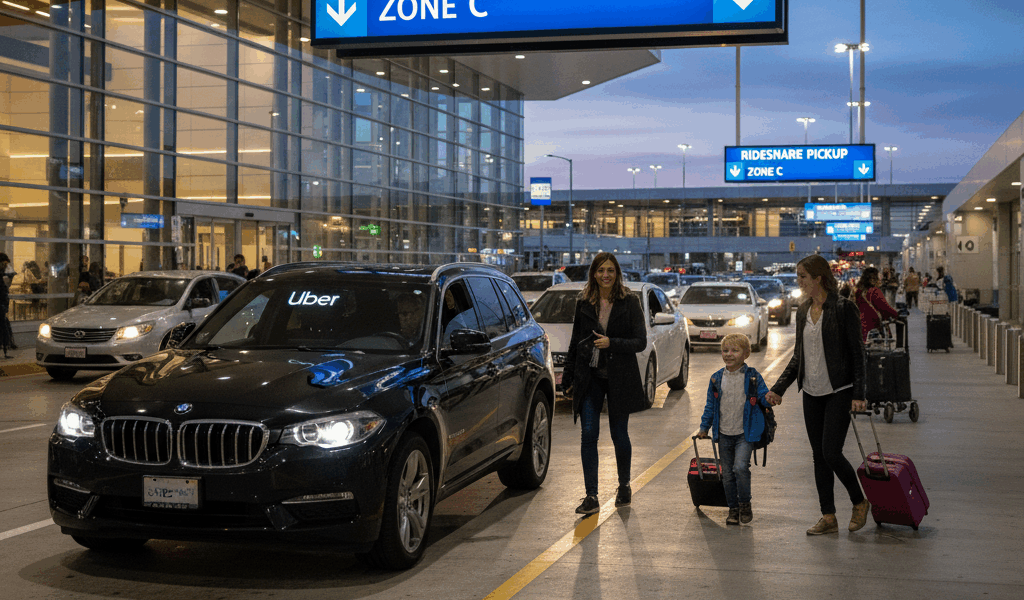
Uber and Lyft have transformed airport transportation, but navigating pickup logistics at major airports requires specific knowledge. Each airport handles ride-share differently, with varying pickup locations, wait times, and access rules. Knowing the quirks before landing saves time and frustration.
How Airport Pickup Generally Works
Most airports prohibit ride-share pickups at terminal curbs—the premium spots reserved for taxis and private cars. Instead, airports direct Uber and Lyft to designated pickup areas that may require walking, shuttle rides, or navigation to parking structures.
Request your ride only after reaching the designated pickup zone. Apps know your location and will direct drivers accordingly. Requesting from baggage claim often results in confusion about where to meet.
Wait times vary dramatically by time of day. Peak arrival periods (late evening, holiday weekends) may show 10-20 minute estimates. Early morning or midday pickups often show cars available within 5 minutes.
Airport-Specific Pickup Strategies
Los Angeles (LAX): The LAX-it lot requires shuttle or walking from terminals. During peak periods, pickup lot congestion adds significant wait time beyond app estimates. The new people mover will eventually change this, but current reality requires patience.
San Francisco (SFO): Dedicated pickup area on level 5 of the domestic parking garage. Well-signed and relatively efficient, though the walk from international terminals takes 10+ minutes.
Atlanta (ATL): Pickup zones in the ground transportation areas outside domestic and international terminals. Reasonably well-organized with consistent driver availability.
New York JFK: Each terminal has its own pickup zone. Follow signs to “App-Based Ride Services” and ensure you’re at the correct terminal location before requesting.
Chicago O’Hare (ORD): Pickup at lower level of terminals 1, 2, and 3. Terminal 5 (international) has separate pickup logistics. Door numbers in app specify exactly where to wait.
Saving Money on Airport Rides
Walk to off-airport pickup if practical. Some airports charge ride-share companies access fees passed to passengers. Pickups from nearby hotels or office parks sometimes cost $5-10 less than airport pickups.
Compare Uber and Lyft pricing before requesting. Surge pricing affects each service independently. At busy airports, one service may show normal pricing while the other surges.
Consider shared ride options for solo travelers. UberX Share and Lyft Shared reduce costs 30-50% when available, trading privacy for savings.
When Taxis Still Make Sense
Fixed-rate taxi zones at some airports offer predictable pricing that beats surge-priced ride-share. Vegas, Miami, and some other cities guarantee flat rates to popular destinations.
During extreme surge periods (major events, weather disruptions), taxi lines may move faster than ride-share wait times. Check both options before committing.




Stay in the loop
Get the latest airport guides world updates delivered to your inbox.