Why TSA Pulls Travelers Aside for Extra Screening
Airport security has gotten complicated with all the confusion and misinformation flying around. Today, I’ll share it all with you — including the stuff agents don’t volunteer upfront.
So, without further ado, let’s dive in.
The most common trigger is a body scanner alarm. But what is a body scanner alarm, exactly? In essence, it’s the machine flagging something on or near your body that warrants a second look. But it’s much more than that — it could be a seam in your jeans, residual deodorant powder, or plain old skin moisture. Walk any TSA line on a busy morning and you’ll see someone waved over every few minutes. Completely routine.
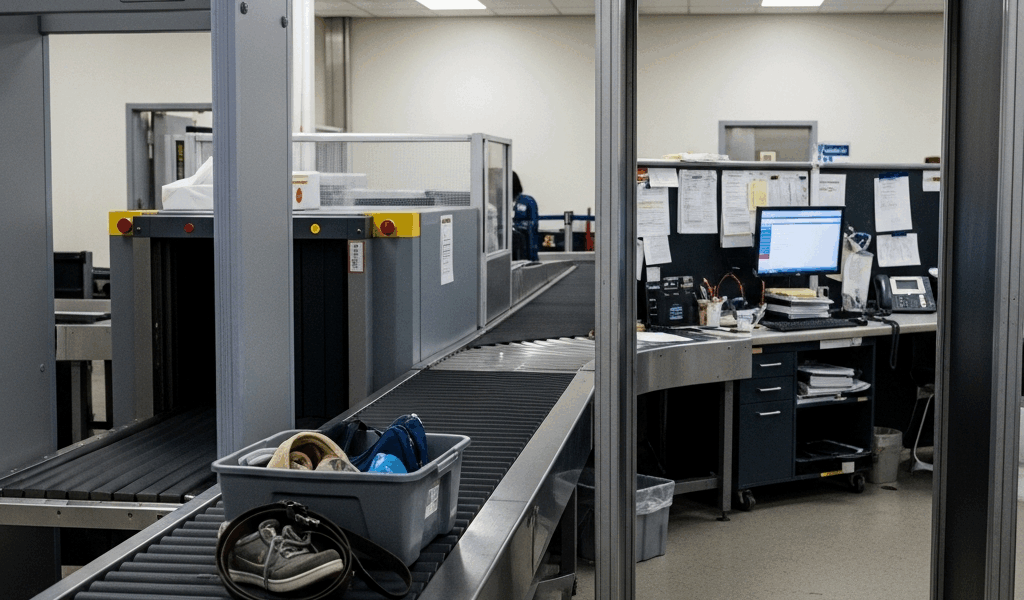
Your carry-on can cause problems too. Dense items, stacked electronics, or a toiletry bag crammed past capacity all create visual clutter on the X-ray feed. The operator isn’t being paranoid — they genuinely can’t see into every corner. A tightly packed bag looks suspicious even when it isn’t.
Then there’s the SSSS designation. Four letters on your boarding pass that most people never notice until an agent is already pointing them toward a secondary lane. Stands for Secondary Security Screening Selection. It can appear for various reasons — many of which have nothing to do with anything you’ve done personally.
Random selection is also real. TSA uses randomization as a deliberate security layer, not a punishment. On my last flagged flight out of O’Hare, I was maybe 47th in a line of 200 passengers. An agent just pointed at me. No pattern, no explanation. Pure chance.
Finally, medical devices almost always trigger secondary screening — insulin pumps, pacemakers, mobility aids. That’s what makes this process endearing to frequent travelers who’ve figured it out: once you understand the logic, it stops feeling personal.
What Actually Happens During Secondary Screening
Probably should have opened with this section, honestly. People catastrophize secondary screening when the reality is mostly boring.
You’re directed to a designated area off to the side of the main checkpoint — usually marked with low rope dividers or a separate table. An agent explains why you were selected and walks you through what’s coming. The whole thing typically runs 5 to 15 minutes. I’ve never gone longer than 12.
The pat-down is what people dread most. An officer uses the back of their hands and open palms along your arms, legs, torso, and back — over your clothing, not under it. You can request a same-sex officer. Just say it directly. The agent will also ask about sensitive areas or medical conditions before starting. Speak up immediately if that applies to you. Don’t wait and hope they skip around it.
ETD swab testing happens fast. The agent swipes a small cloth patch — roughly 2 inches square — across your hands, clothes, or bag exterior. The machine analyzes it in maybe 90 seconds. If you handled fertilizer recently, work with certain industrial chemicals, or fired a weapon at a range within the past day or two, you might get a positive result. That’s fine. A positive reading isn’t an accusation — it’s just data. No one gets arrested because their hands smell like a gun range.
Your bag gets hand-searched next. The agent opens it methodically, checking bottle sizes, pulling out the laptop, examining whatever flagged on the X-ray image. It’s less dramatic than people imagine. I’m apparently a chronic over-packer and my Eagle Creek duffel works fine because everything’s in labeled cubes, while loose bags never survive the search quickly. Don’t make my mistake — a disorganized carry-on turns a 6-minute search into a 14-minute one.
What agents cannot do: confiscate your electronics without documented cause, force open locked compartments, demand your phone password, or touch you inappropriately during a pat-down. Cross any of those lines, and you have every right to stop and request a supervisor. That said — most officers are professional. They run through this process hundreds of times per shift.
How to Get Through It Without Missing Your Flight
Arrive early. I mean actually early — two hours for domestic flights minimum if secondary screening is a possibility for you. One hour is cutting it dangerously close. The buffer isn’t about comfort; it’s about not having a panic attack at the gate.
Stay calm and cooperative. This sounds obvious until you watch someone in line talk back to an agent and then stand there for 20 extra minutes while paperwork gets involved. Being direct and polite moves things along. Being defensive does the opposite. Answer questions clearly. Don’t editorialize.
Ask questions when something’s unclear — “why am I being screened?” and “how long will this take?” are both fair, and agents expect them. Most will answer without attitude.
If your flight boards in 20 minutes or less, tell a TSA agent immediately. Ask them to contact your gate. This actually works — I’ve watched it happen at LAX in 2022, a woman nearly sprinting toward the checkpoint with 18 minutes to boarding. The agent radioed ahead. She made it. The gate won’t hold indefinitely, but communication buys time.
Don’t argue policy. Don’t demand a manager unless something genuinely improper occurred. Don’t start unpacking your bag before being asked. Just respond to what’s being asked of you, right now, in real time.
What to Do If You Think the Screening Was Unfair
TSA has a formal complaint process — and it’s actually usable. You can file at the airport with the TSA Complaint Resolution Official on-site, or submit one online through the TSA website. Include specifics: the date, your flight number, departure time, a description of the officer, and exactly what happened in sequence. TSA reviews these complaints. Responses take several weeks, but they do come.
Request a supervisor on the spot if something inappropriate happened during the screening itself. Be specific. Stay calm. Supervisors at larger airports — O’Hare, JFK, LAX — are usually accessible within a few minutes of being requested.
The TSA Contact Center number is 1-866-289-9673. Call with policy questions or to escalate a complaint that didn’t get resolved at the airport level. They can explain selection criteria and address concerns about how your screening was handled.
Traveling with a disability or a medical condition that complicates screening? Look into TSA Cares. You can schedule a pre-flight consultation — free of charge — to walk through your specific situation with TSA staff before you ever reach the checkpoint. Genuinely useful if you travel regularly with a device like a colostomy bag, external pump, or prosthetic limb.
How to Reduce Your Chances of Being Flagged Again
TSA PreCheck is worth it. At $78 to $85 for a five-year enrollment, you keep your shoes on, your belt on, your light jacket on. Laptop and liquids stay in the bag. The PreCheck line at most major airports moves faster than the standard line by a significant margin — I’ve clocked it at 4 minutes versus 22 minutes on the same morning at Midway. Even PreCheck members get randomly flagged sometimes, but the screening is noticeably less intensive when they do.
Pack with X-ray clarity in mind. Don’t stack dense items against soft ones. Pull electronics and liquids out before you reach the belt — don’t wait until you’re at the machine. Wear minimal metal on travel days. I learned this flying to Denver last October wearing a belt with a oversized brass buckle that triggered the scanner on three separate passes. The agent looked at me like I’d personally offended him. Fair.
Slip-on shoes aren’t just for convenience. Metal hardware on lace-ups, metal eyelets, thick rubber soles — all of it can contribute to scanner alerts. It sounds overly cautious, but swapping boots for loafers on travel day genuinely reduces false alarms.
Keep your bag organized. Packing cubes help — I use the Osprey Ultralight set in three sizes, $38 on Amazon, and they’ve made every bag search faster. Put your toiletry bag near the top. Make it easy for agents to see what you’re carrying without digging.
Even frequent flyers with Global Entry and PreCheck get flagged occasionally. Being prepared matters more than trying to avoid it entirely. The fastest path through secondary screening has always been the same: stay calm, cooperate, and let the process run its course.


Stay in the loop
Get the latest airport guides world updates delivered to your inbox.