Why Airlines Change Seat Assignments at the Gate
Your flight seat assignment changes for concrete operational reasons—and understanding them actually helps you navigate the conversation with gate agents. I’ve been through this twice in the last eighteen months, and the first time, I had no idea why it happened or what I could even ask for.
Airlines swap seat assignments for five main reasons. First, aircraft substitutions happen when the scheduled plane develops a mechanical issue overnight. A Boeing 737-800 has a different cabin layout than a 737-900, which means row 12 seat A on your confirmation might vanish entirely on the replacement aircraft. Second, oversold flights force reaccommodations—the airline sold more seats than available (legal under US law), so they reassign lower-priority passengers to free up premium seats for earlier boarders or elite members. Third, special needs accommodations take priority. A passenger boarding an earlier flight needs your wheelchair-accessible aisle seat, so you get moved. Fourth, crew rest requirements and international crew restrictions sometimes eliminate specific rows. Fifth, weight and balance calculations occasionally require moving passengers around for proper aircraft center of gravity—rare for domestic flights but real for international and cargo-heavy routes.
None of this is personal. Airlines don’t wake up and decide to punish you.
The operational reality means your response strategy changes based on the reason. A medical accommodation bump? That’s genuinely non-negotiable. An oversold situation? You have leverage. A fuel-related weight-and-balance move to row 32 on a full flight? Probably not negotiable, but worth asking.
Immediate Steps When You’re Told Your Seat Changed
Probably should have opened with this section, honestly—because what you do in the first thirty seconds at the gate determines whether you get resolution or resentment from the agent.
Step one: confirm it’s permanent. Ask directly: “Is this a temporary reassignment while we wait for final boarding, or is this my final seat assignment?” I once panicked about moving from 12F to 24C only to learn the gate agent was just moving me temporarily to speed up the boarding flow. Wait five minutes, and I went back to 12F. Don’t waste escalation energy on something that might reverse on its own.
Step two: ask why. Use this exact phrasing: “I see my seat’s changed—can you tell me what happened?” This is neutral, not accusatory. The agent will either tell you the real reason or give you a vague non-answer. If they say “system error,” push: “Can you clarify what kind of error?” Real operational issues have actual explanations — aircraft change, oversold situation, accessibility accommodation. If they won’t explain, that’s a signal to escalate.
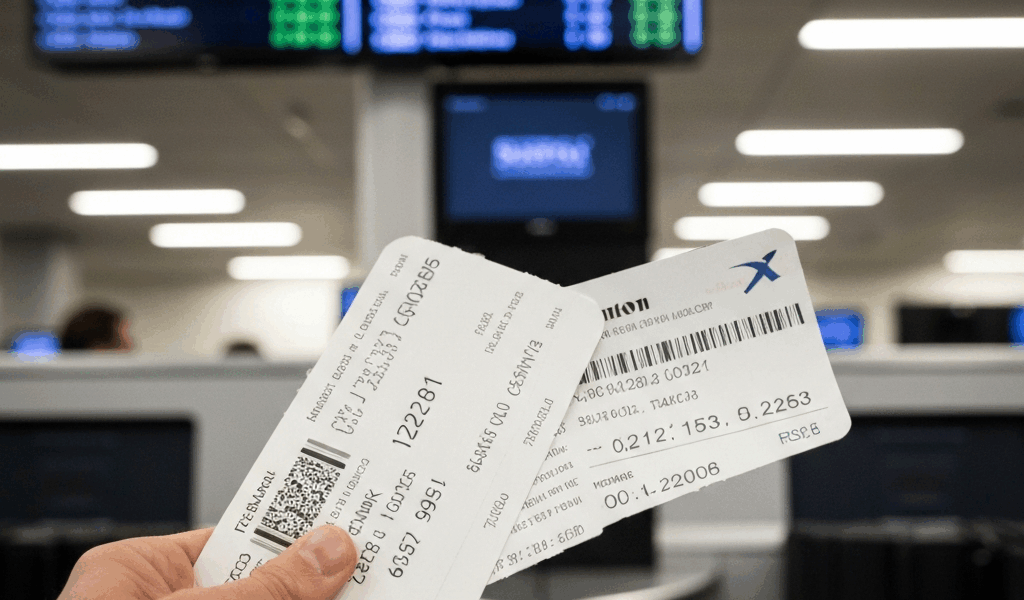
Step three: look at your new seat on the boarding pass they hand you. Don’t just nod and walk away. Check row number, seat letter, and whether it’s a middle seat, window, or aisle. This takes twenty seconds and prevents walking to gate 47 only to discover you’re now in the back of the plane.
Step four: assess if it’s acceptable. Are you separated from a traveling companion? Is it a middle seat when you booked an aisle (your reason matters — if you have IBS, this is a big deal; if you just prefer aisles, less so)? Did you previously have an accessibility accommodation? Is the new seat near the lavatory or galley (which some people actively avoid)? If the answer to any of these is yes, move to the next section. If the new seat is genuinely fine — you’re still in your paid cabin, row 24 versus row 12 doesn’t materially affect your flight — acknowledge it and move on.
What not to do: don’t immediately argue, raise your voice, or accuse the agent of wrongdoing. Don’t say “This is unacceptable” before understanding the situation. Don’t reference your loyalty status or how much money you’ve spent on flights (agents hear this constantly, and it hardens their position). Don’t record the interaction without asking permission first.
How to Push Back if the New Seat Is Unacceptable
Escalation works like a ladder, and you need to know which rung to climb.
Start with the gate agent again, but reframe the request. Use this magic phrase: “I booked this seat for a specific reason — [reason]. I understand you’re dealing with a situation, but I’m asking if there’s any way to accommodate what I originally booked.” This acknowledges their constraints while asserting your legitimate need.
The reasons that get traction are: traveling with a child under ten (they can’t separate you); accessibility needs (wheelchair, mobility device, service animal); medical accommodation documented in your file (anxiety requiring aisle seat, colostomy requiring proximity to lavatory); or booking a specific cabin you paid extra for (premium economy, business class). Vague preferences rank lower: “I like window seats” or “I prefer the back of the plane” won’t move an agent who’s juggling twenty reassignments.
If the gate agent says no, ask: “Is there a supervisor I can speak with?” Don’t frame it as “I want to complain about you.” Frame it as “I need to explore this with someone who might have different options.” Gate agents often have their hands tied by crew requirements or technical constraints supervisors can override.
The supervisor conversation is different. Lead with the situation, not emotion: “My original seat was 12F. I was reassigned to 24C due to an oversold situation. I’m traveling with my eight-year-old son, and I need to stay with him. What options exist?” This tells them you understand the operational reality while clearly stating your constraint.
If neither the gate agent nor supervisor can help, ask for the customer service desk. This is rare but happens on oversold flights or aircraft changes on larger hubs. The customer service desk sometimes has access to companion seats, upgrade inventory, or later flight options that gate operations can’t touch. You’re looking for either your original seat back, a different acceptable seat on this flight, or confirmed rebooking on the next flight with a seat that works for you.
For separated traveling companions, there’s a specific lever: ask if the airline will move the other passenger instead of you. Sometimes they will. If you booked seats together and got separated, that’s the airline’s mistake — they should fix it by moving someone who was overbooked or reassigned second, not by moving the person who’s already settled in.
Your Rights by Airline and Region
United Airlines and Delta Airlines honor their original seat assignments unless operational necessity forces a change. Neither explicitly guarantees a specific seat in their fine print, but both policies acknowledge that oversold reassignments and aircraft changes happen — and both have procedures to minimize passenger impact. Southwest Airlines doesn’t assign seats at all (open seating), so this issue doesn’t apply to them. American Airlines, Alaska Airlines, and Frontier have similar policies: honoring original assignments with exceptions for operational changes.
The US Department of Transportation doesn’t mandate compensation for seat changes per se, but the rules around oversold flights do apply. If you’re involuntarily denied boarding due to oversold, you’re entitled to compensation (100-400 dollars depending on delay, plus rebooking). A seat change at the gate isn’t quite denial of boarding — you can still fly, just from a different seat — so DOT compensation doesn’t automatically trigger. However, if the new seat is in a lower cabin class (premium economy downgraded to economy, for example) or creates a legitimate accessibility issue, some DOT guidance suggests compensation is warranted. Documenting everything (photos of your boarding pass before and after, gate agent names, times) helps if you file a DOT complaint later.
EU261 regulations are stricter if you’re flying within or from Europe. The rule states that passengers have a right to “care and assistance” if the airline’s operational needs force significant changes — which can include seat reassignments that separate families or violate booked cabin class. If a European carrier downgrades you or separates you from a companion at the gate, EU261 technically gives you grounds for compensation (200-600 euros). In practice, enforcement varies by country, but it’s worth knowing the rule exists when dealing with European carriers or European flights.
International carriers vary widely. Some Middle Eastern and Asian airlines routinely reassign seats without passenger consent. Check your carrier’s specific policy before flying — most post it in their terms and conditions (buried, but there).
How to Prevent Seat Assignment Changes
Prevention is actually simpler than dispute resolution.
Select your seat strategically. Book seats 48-72 hours before departure, not six months early. Why? Because gate-day reassignments pull from seats changed most recently. If you booked row 12F months ago, the airline’s system is less likely to touch it than a seat chosen last week. Front cabin seats (rows 1-6) get reassigned less frequently — not because the airline favors them, but because they’re premium and fewer people get moved out. If you want to minimize risk, book premium economy or economy plus with your preferred airline’s loyalty program.
Check in online exactly 24 hours before departure, not twenty hours, not twenty-three hours. This locks your seat assignment into the system at the most stable moment. I’ve noticed that people who check in at 23 hours versus 24 hours experience reassignments more often — probably coincidence, but the 24-hour window feels like the safest spot.
Fly routes with your airline’s largest, newest aircraft. A Boeing 787 or Airbus A350 is less likely to be swapped out than a regional jet or ten-year-old 757. Check aircraft type when booking, and avoid routes with historical equipment instability. If the same airline uses four different planes on a Wednesday morning flight to Denver, you’re at higher risk than a flight with consistent equipment history.
Avoid oversold flights by flying on unpopular times. Red-eye flights, very early morning departures, and mid-week mid-afternoon flights oversell less often than Thursday afternoon and Sunday evening flights. If you have flexibility, choose the less convenient time.
Frequent flyer status or elite status on your carrier grants protection. Delta SkyMiles members at Silver and above get seat assignment protection — the airline won’t reassign you without notification and alternative options. United Premier members at Silver and above get similar protection. If you fly a specific airline regularly, status membership pays dividends specifically for situations like this.
Finally, if you’re traveling with a companion, book seats that won’t auto-split. Some airlines reassign one seat when a passenger is marked for oversold accommodation. If you and your travel partner book window and middle seat together (rather than aisle and middle), the algorithm is less likely to split you — aisle seats reassign first.
These tactics won’t prevent every reassignment, but they shift odds in your favor. And when a change does happen — because eventually it will — you’ll know exactly what to ask for.


Stay in the loop
Get the latest airport guides world updates delivered to your inbox.